As families grow and evolve, so do their needs. A home that felt comfortable and spacious a few years ago can suddenly feel tight, cluttered, or unable to support the way your family now lives day to day. That shift often leads families to consider whether their next home should include flexible floor plans – layouts intentionally designed to adapt to your lifestyle over time.
Unlike traditional floor plans that lock you into static room functions, flexible floor plans allow your home to grow with you, bend with your needs, and support your family through every stage of life. They give you options. They give you breathing room. They allow your home to evolve instead of forcing you to uproot every time your needs change.
Whether you’re planning to welcome a new baby, designing space for teens, adapting to a hybrid work schedule, or preparing for long-term caregiving, choosing a home with adaptability built into its layout can dramatically improve your comfort, lifestyle, and long-term satisfaction.
In this guide, we’ll explore why flexible design matters, what features to look for, and how to evaluate whether a home truly has the versatility your family needs.
Why Flexible Floor Plans Matter for Growing Families
Life with a growing family is dynamic. Needs shift, routines evolve, and spaces that once worked perfectly can become less functional over time. Bedrooms that once housed toddlers may later need to accommodate teens. A dining nook that once felt intimate may feel cramped as your family size increases. Spaces once used for storage might one day need to transform into work-from-home areas or quiet homework zones.
Flexible floor plans solve this problem by giving families the ability to change the way they use space without major renovations. Rather than being forced into an expensive remodel – or an unexpected early move – you have the ability to adapt your home as life evolves.
The idea is simple: flexibility creates longevity. A flexible home isn’t one you grow out of quickly. It’s one that bends, shifts, and expands in function as your needs do.
The Hidden Value of Homes That Adapt Over Time
When families look for a new home, they typically focus on immediate needs: the right number of bedrooms, enough bathrooms, a good-sized kitchen, and proximity to schools or parks. While those priorities matter, homes with flexible floor plans offer something just as important but often overlooked: long-term value.
A flexible home is a home you’ll stay in longer.
Being able to convert a room from a nursery to a playroom, from a playroom to a teen lounge, or from a home office to a guest suite reduces the friction that often forces families to move. That longer lifespan helps protect your investment, reduce moving costs, and keep your family rooted in a neighbourhood you love.
Flexibility also increases resale appeal. Today’s buyers – not just young families – are actively seeking homes that are versatile enough to support aging in place, hybrid work, multi-generational living, or blended family structures. When life is unpredictable, adaptable homes are more desirable.
Key Features of Flexible Floor Plans
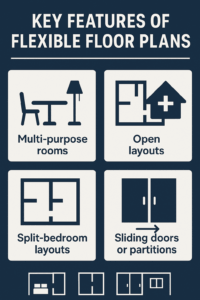
The features you should look for when evaluating homes with flexible floor plans:
- Multi-purpose rooms that can shift functions over time
- Open or semi-open layouts that offer reconfiguration options
- Split-bedroom layouts that support privacy as families grow
- Sliding doors, partitions, or zones that create room separation when needed
Understanding Multi-Purpose Spaces
One of the defining traits of flexible floor plans is the use of multi-purpose rooms – spaces designed to serve more than one function depending on your needs.
A multi-purpose room might start as a nursery during early years, evolve into a playroom, transition into a homework zone or lounge area, and later become a guest room. These rooms have flexible proportions and strategic placement within the layout, they can transform without requiring structural changes.
These rooms aren’t labelled by the builder as strictly one thing. Instead, they invite imagination. They allow you to define them, redefine them, and reimagine them as your lifestyle shifts.
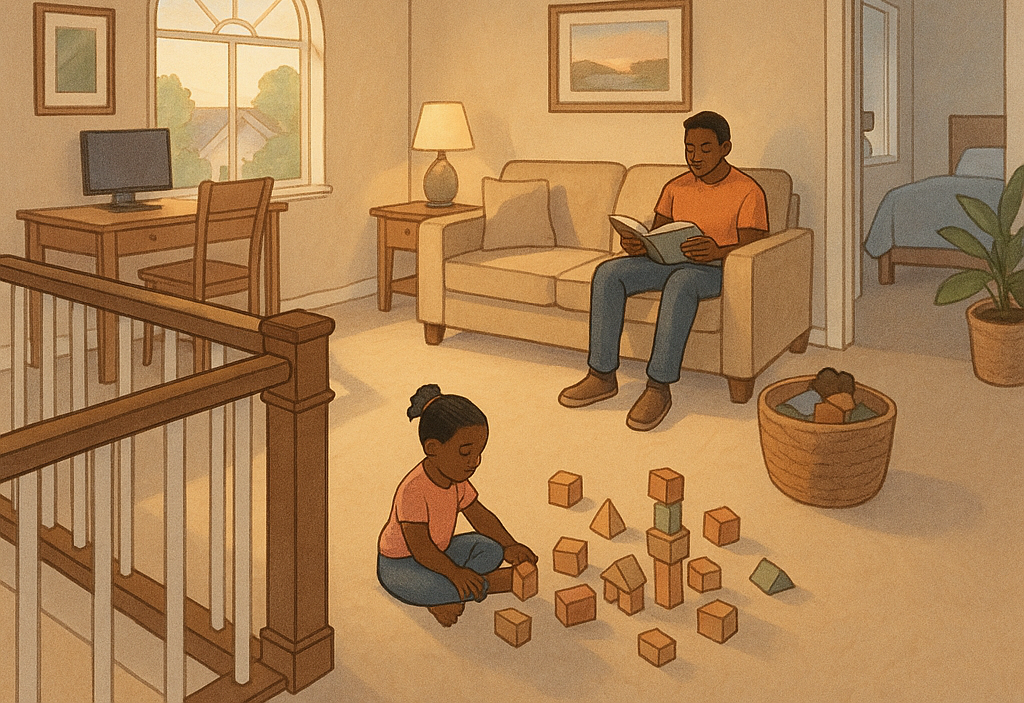
For hybrid-working families, multi-purpose rooms are especially valuable. A space that functions as a quiet home office during work hours can quickly transition back into family space when needed. The ability to shift seamlessly between private and shared use is a trademark of strong flexible design.
Why Open Layouts Still Matter – With Boundaries
Open-concept homes have been popular for years, and while design preferences continue to evolve, open layouts remain one of the most powerful components of flexible floor plans.
An open main floor allows you to configure living, dining, and kitchen spaces in ways that suit your family’s rhythm. Furniture arrangements can evolve as children grow, holiday gatherings expand, or your needs shift. Open spaces give you visual connectivity, which is especially helpful in families with young children.
However, the most flexible homes today blend openness with intentional boundaries. Semi-open concepts – spaces connected visually but still defined – offer the best of both worlds. They allow families to maintain sightlines while creating zones for work, play, dining, and conversation. This balance is essential for long-term comfort.
Homes that include sliding doors, pocket doors, or room dividers offer an added layer of flexibility. These features let you temporarily section off areas when you need privacy or quiet without compromising the open feel of the home.
The Power of Bonus Rooms and Finished Basements
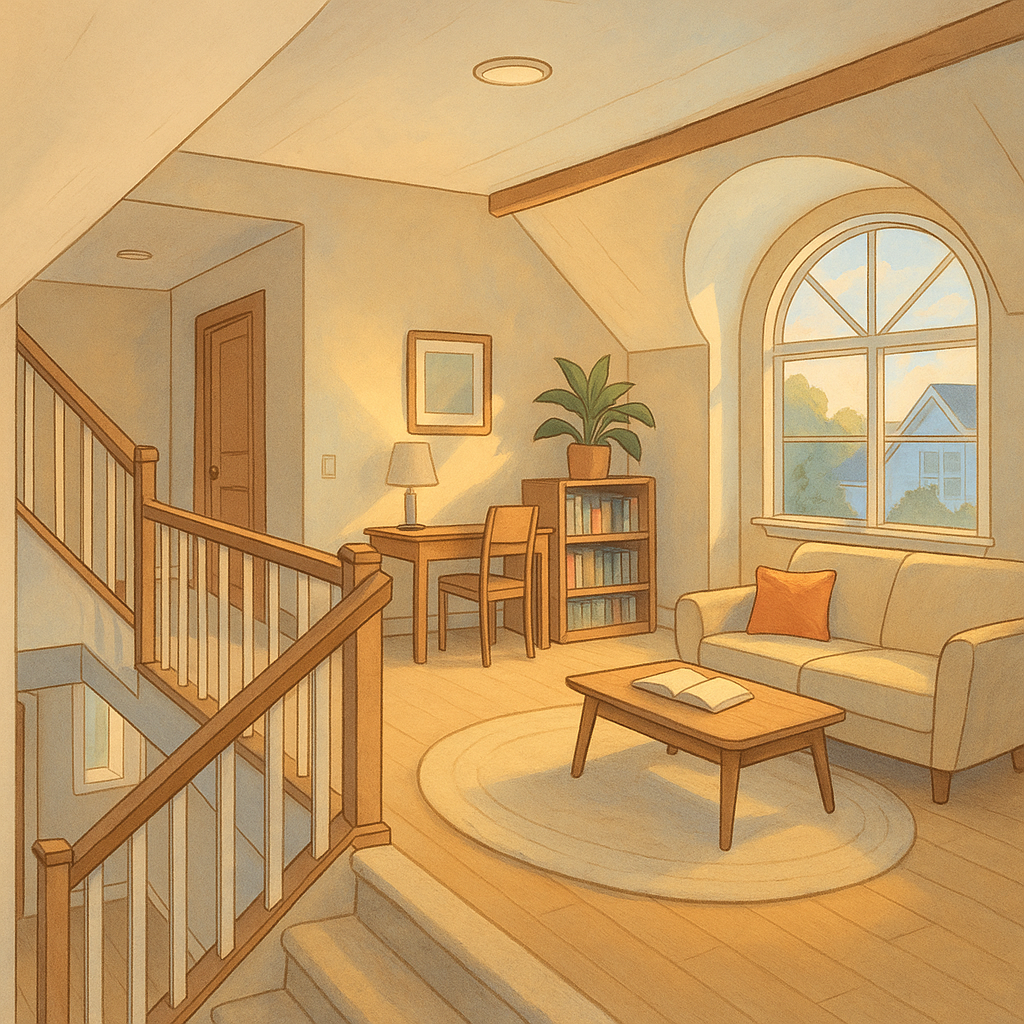
For growing families, bonus rooms are gold. Whether it’s a loft on the second floor, a large landing area, a converted attic, or a finished basement, these additional spaces can support evolving needs.
In a home with flexible floor plans, bonus rooms function as everything from teen lounges and media rooms to home gyms, art studios, or even income-generating suites if zoning and design allow.
Finished basements are particularly valuable. With the right setup, a basement can become an independent zone for older children, an office space for remote work, or a comfortable guest suite. The key is making sure the space is designed in a way that allows it to evolve – sufficient natural light, good ceiling height, and proper access matter more than elaborate finishes.
Why Bedroom Placement Matters More Than You Think
Flexible design isn’t just about large rooms or open concepts. It’s also about relationship dynamics, privacy, and noise control.
Homes with thoughtfully placed bedrooms give families the flexibility to adapt without creating friction. For example, split-bedroom layouts – where the primary bedroom sits on one side of the home and secondary bedrooms are on the other – are ideal for families with older children who value privacy.
In multi-level homes, bedroom placement also supports flexibility through life’s transitions. Bedrooms on different floors allow older family members to have their own quiet retreats, or they can offer short-term living solutions for relatives during life’s unpredictable seasons. These layout variations often differ across neighbourhoods, making it helpful to consider both the home and its surrounding area when deciding what will work best for your family long-term.
Kitchens Designed for Adaptability
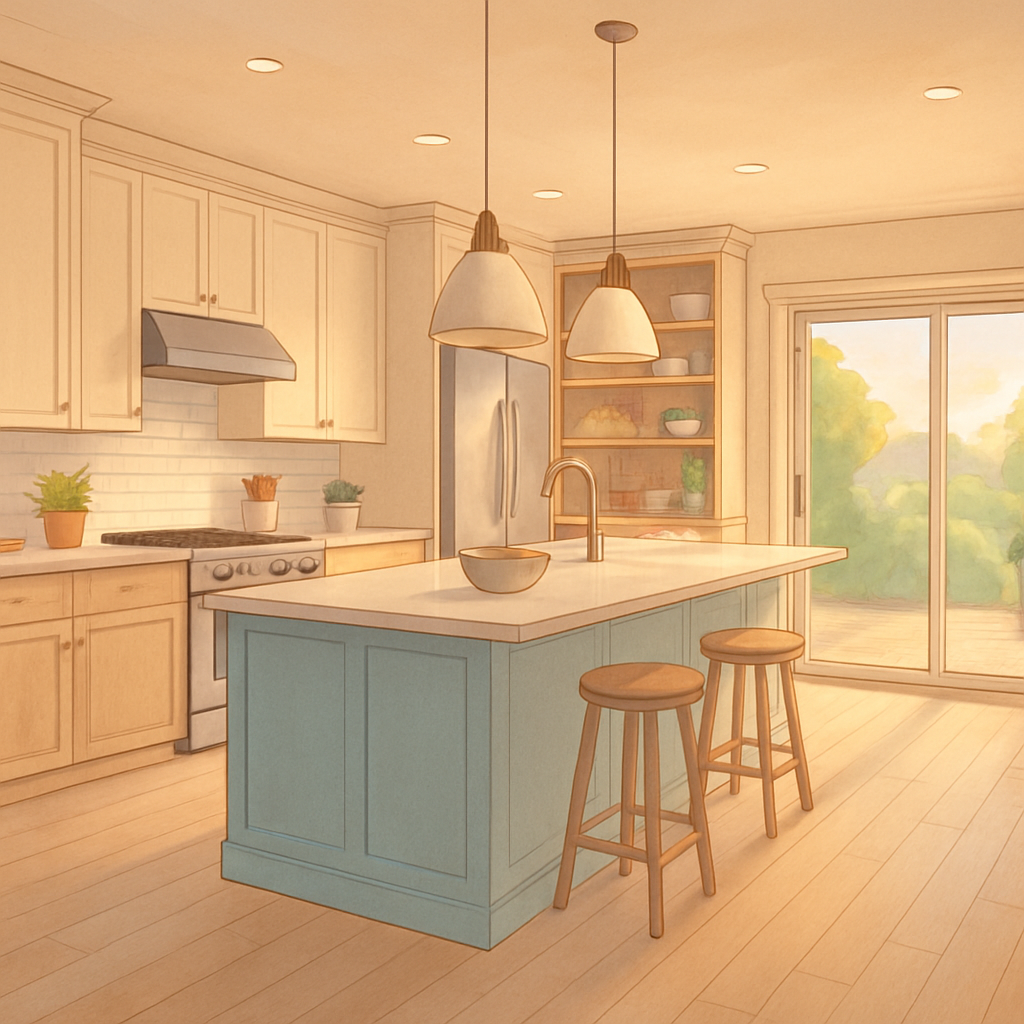
Kitchens are the heart of the home, and in families with dynamic needs, they play an essential role in flexibility. A kitchen designed for adaptability includes generous storage, functional layouts, and room for multiple people to work, socialize, or help with meal prep.
Islands with seating, walk-in pantries, and durable surfaces contribute to long-term comfort. The ability to shift how the kitchen is used – whether you’re managing young children, hosting relatives, or accommodating teenagers with late-night snacks – makes the kitchen a key part of the overall flexible design.
The Role of Outdoor Spaces in Flexible Living
Flexible floor plans extend beyond the walls of the home. Outdoor areas such as patios, decks, backyards, and side yards contribute significantly to how families live and use space.
A well-designed outdoor area can act as an extension of your interior living zones. It can serve as a play area, a relaxation space, a gathering spot, or even a seasonal dining zone. As families grow older, outdoor spaces can shift in function – supporting different hobbies, social gatherings, or everyday routines.
When evaluating homes and potential listings, consider whether the outdoor space has room to evolve with your family. Layout, privacy, shade, and access all influence whether a yard will continue to serve you well over time.
Final Thoughts
Choosing a home that includes flexible floor plans is one of the smartest decisions a growing family can make. These homes don’t just solve your needs today – they support your future, adapt gracefully to life transitions, and offer the breathing room your household needs as it evolves.
A flexible home helps reduce stress, minimize the need for frequent moves, and create a foundation for long-term stability. As you search for your next home, prioritizing adaptable layouts ensures that your space feels supportive not just now, but for every chapter to come. If you’re beginning your search and want guidance choosing the right fit for your family, you can connect with our team anytime.