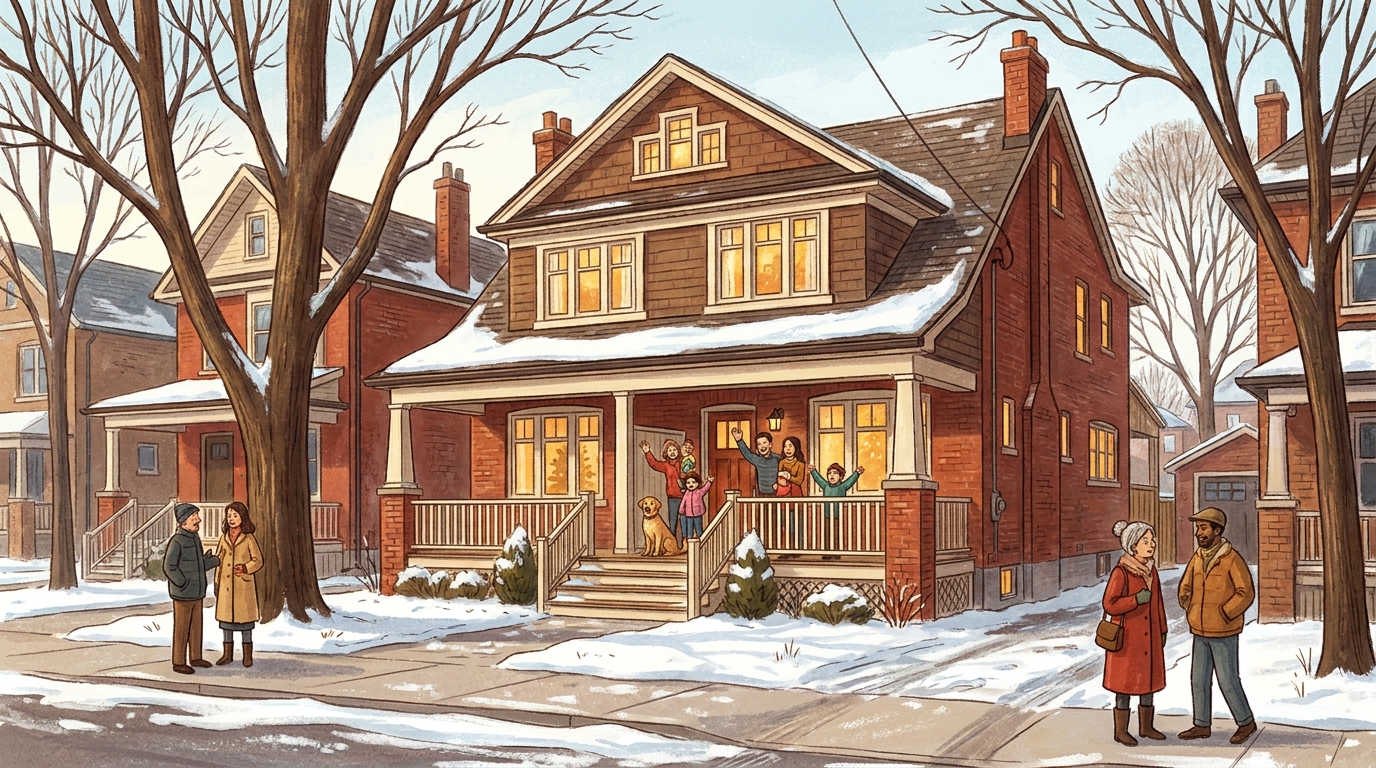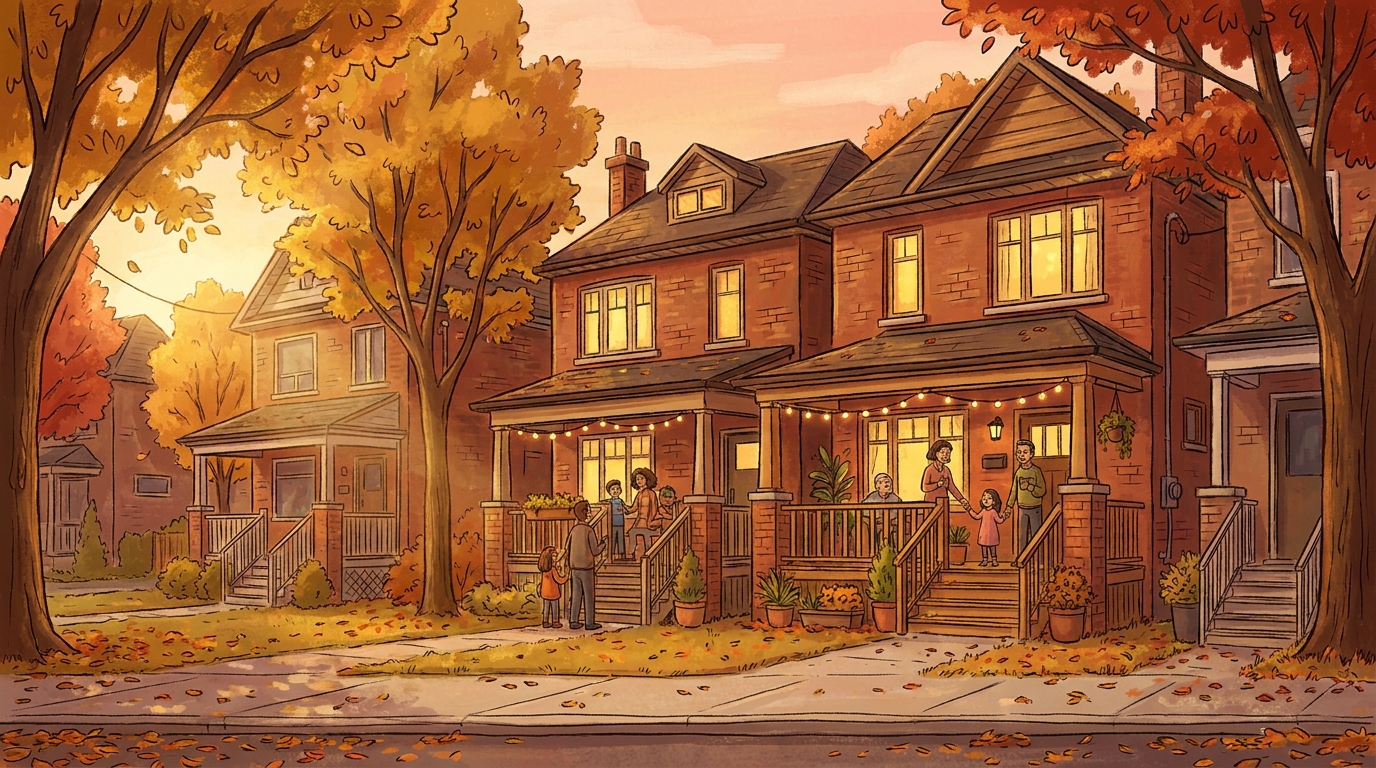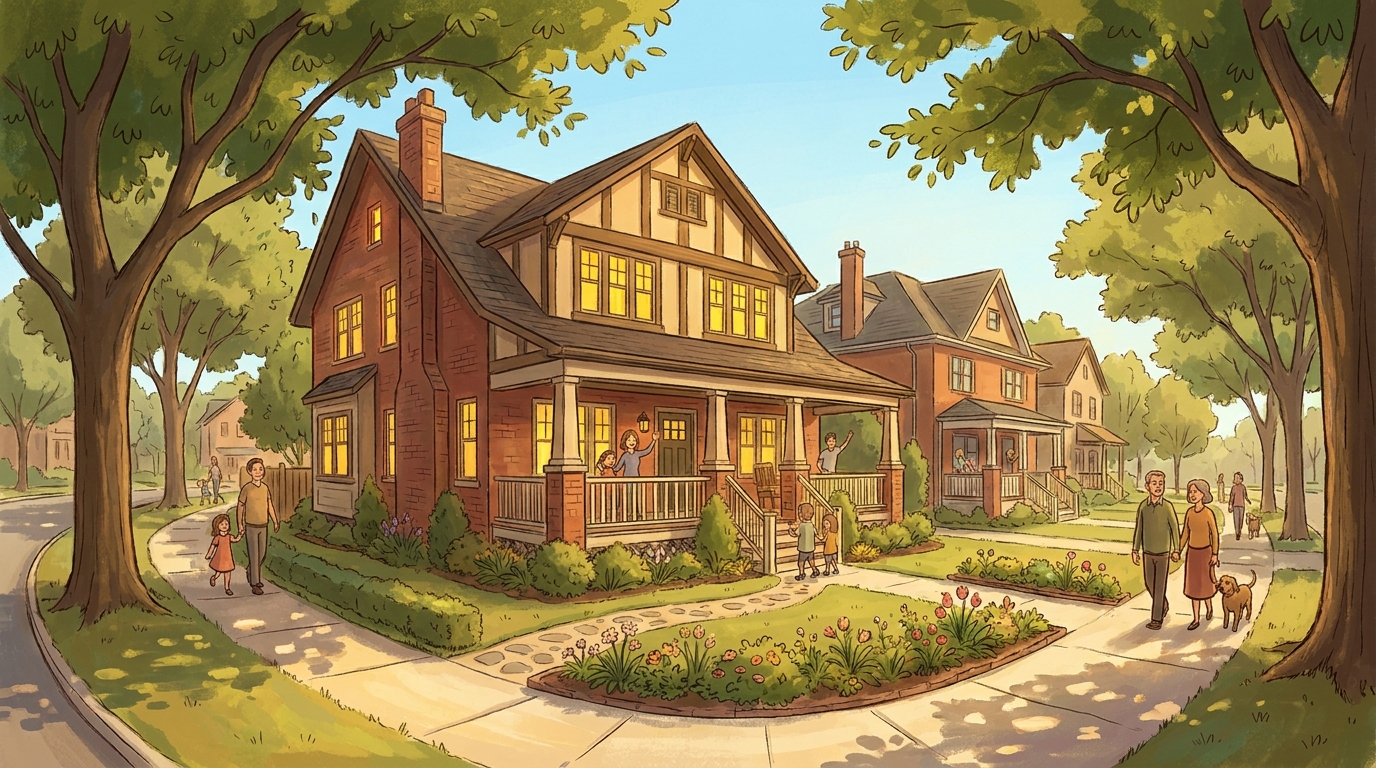
Scrolling Pinterest on a Sunday night can feel like progress. You save a bright kitchen, a calm mudroom with cubbies, a backyard that somehow stays green, and a playroom that looks effortlessly tidy. When it’s time to choose a home, families quickly learn that inspiration is only the first chapter. The real story is written in routines, trade-offs, timelines, and the very human need to feel settled.
If you’ve ever wondered how families choose a home in the real world – beyond the highlight reels – this is the behind-the-scenes version. It’s less about finding a “dream house” and more about choosing a space that supports the life you’re living, while still making room for what comes next.
The Pinterest Phase: The Life You’re Trying to Build
Most families begin with a feeling, not a floor plan. Maybe mornings are too cramped. Maybe two people are competing for the same quiet corner to take calls. Maybe the kids are growing and the house suddenly feels like it shrank overnight. Pinterest boards don’t just show style preferences – they reveal what a family is hungry for: smoother mornings, more storage, a place to host without stress, or simply a bedroom door that closes.
This is also where expectations can inflate. Online images are staged for impact, not for backpacks, lunch containers, and sports gear. So the trick isn’t to stop dreaming – it’s to translate the dream into function. When you start naming what the pins represent (light, flow, space, calm), you’re closer to the kind of home that will actually work.
The Reality Check: Numbers, Timing, and What’s Possible
The moment you decide to seriously choose a home, the practical questions move to the front. What can you afford without feeling stretched every month? What will your current home sell for in a realistic scenario? How much runway do you need for moving costs, closing costs, and the first round of “surprise” repairs?
For many households, this stage is emotionally loaded because it forces choices. A bigger home might mean a longer commute. A prime school catchment might mean less square footage. A turnkey renovation might mean paying for finishes you wouldn’t have chosen, while a fixer-upper might mean living through disruption you don’t have time for.
What helps most is clarity. Clarity looks like knowing your comfortable monthly range, understanding your down payment and cash buffer, and deciding whether you’re optimizing for space, location, schools, or lifestyle. Once priorities are explicit, the search becomes less overwhelming.
The Family Alignment Moment: Needs, Wants, and the Truth
Every couple hits a point where the conversation has to get honest. Not “wouldn’t it be nice if” honest – “what do we need to stay sane” honest. This step determines whether you’ll shop with confidence or spin in circles.
Here’s a simple framework families use to align quickly:
- Non-negotiables: the features that protect daily life (minimum bedroom count, commute limit, school boundary, parking setup, accessibility needs).
- Strong preferences: the things that significantly improve quality of life but can be compromised on (renovation level, basement finish, open concept vs. defined rooms).
- Bonus features: the “we’d love it, but we won’t lose a great home over it” items (specific finishes, a perfect ensuite, the exact backyard depth).
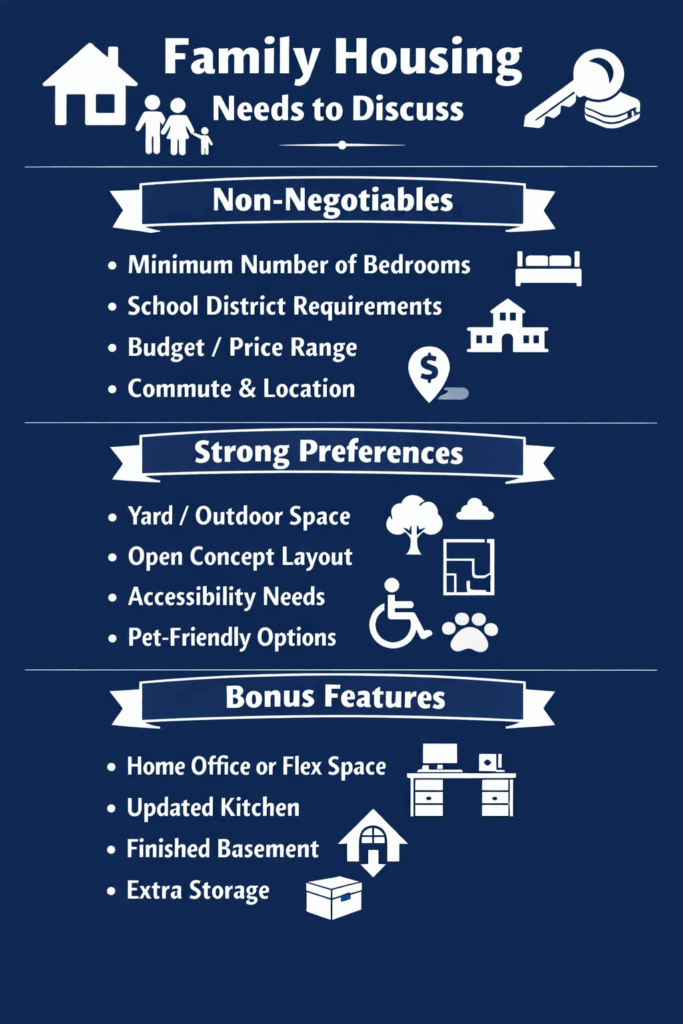
When you can name what truly matters, you can choose a home faster – and with less regret – because you’re measuring each option against your real life, not against a perfect image.
Neighbourhood Shortlists: Choosing a Rhythm, Not Just a Street
Families don’t just pick a property. They choose a pattern for their week: school drop-offs, after-school activities, groceries, parks, and the community you’ll bump into on a Tuesday evening when you’re tired and the kids still need to burn energy.
Instead of “let’s look everywhere,” families tend to get better results when they pick two or three neighbourhoods that match their non-negotiables and explore those areas deeply. When you do that, you notice what doesn’t show up in listing photos: street noise, traffic patterns, winter parking realities, and whether daily logistics feel easier or harder.
A helpful test is to picture an ordinary weekday. Where do the boots land? Can one parent get the kids out the door while the other starts work? When you can visualize routine, you’re closer to being ready to choose a home with confidence.
How Families Shop Now: Research, Emotion, and Decision Fatigue
Modern home searches are intense. Families scroll listings, save favourites, compare sold prices, and try to decode whether a home is “great value” or simply staged well. Then they add open houses and neighbourhood drives – and eventually, decision fatigue.
After enough homes, everything blurs: the third “open concept main floor,” the fifth “cozy finished basement,” the tenth “great family neighbourhood.” That’s why it helps to evaluate consistently. The question isn’t “is this pretty?” It’s “does this support our lives?”
When families successfully choose a home, they usually balance two things: how the home feels in the moment, and how it performs on the basics – flow, condition, location, and long-term fit.

Showings: When the Heart Jumps Ahead of the Math
There’s a moment almost every family remembers: walking into a home and instantly imagining life there. You can see the kids at the table. You know where the Christmas tree would go. You can picture a quiet coffee in that corner where the light hits at 8 a.m.
That emotional pull isn’t a problem. The key is not letting the emotional moment do all the deciding. When you’re ready to choose a home, emotion should be a signal, not a verdict.
After a showing, ask: did this solve the problems that pushed us to move? Can we live with the compromises for the next five to ten years? Is the layout usable for routines, not just impressive on first impression? If the answers are yes, the excitement is earned.
The “Good Enough” Decision: Choosing What Matters Most
The best homes aren’t perfect – they’re supportive. They give you breathing room. They reduce friction. Families who choose a home well tend to choose the one that makes day-to-day easier, even if it’s missing a few aesthetic extras.
Sometimes that means taking a slightly smaller house in the right neighbourhood. Sometimes it means accepting an older kitchen because the layout is ideal. Sometimes it means saying yes to a home that feels right, even though you can’t articulate every reason on paper.
A strong decision often comes with a mix of excitement and nerves. That doesn’t mean you’re making a mistake – it means you’re making a meaningful change.
Offer Strategy: Turning a Favourite Into Your Future
When it’s time to move from “we love it” to “we want it,” preparation matters. If you understand value, financing, and timing, you can act decisively without feeling reckless.
To choose a home in a competitive environment, you need an offer strategy that matches the moment. That might mean moving quickly when the property checks your non-negotiables, or holding firm when the numbers don’t make sense. If you want an experienced team in your corner to pressure-test pricing, timing, and negotiation strategy before you commit, connect with The Halyard Group

From Possession to “Home”: The Part No One Pins
Closing day is a milestone, but it isn’t always instant comfort. After months of searching and deciding, it can take time to settle. A home becomes yours in layers: the first familiar routine, the first quiet night, the first morning where everything is still in boxes but you already feel more at ease.
If you’re in that transition, make life functional before making it beautiful. Get the kids sleeping comfortably. Set up the kitchen basics. Create a landing zone by the door. Those practical anchors do more to help you feel at home than any trendy paint colour ever will.
Pinterest is inspiration – but possession is intention. When families choose a home thoughtfully, they aren’t just buying walls and a roof. They’re choosing a pace, a routine, a community, and a place where the next chapter can unfold.