For many households, upsizing with toddlers does not begin with ambition. It begins with friction. The hallway feels narrower than it used to. The dining table doubles as a craft station. Nap schedules overlap with work calls. The home that once felt perfectly manageable now feels stretched in quiet but persistent ways.
The toddler years are intense, joyful, and logistically demanding. Upsizing with toddlers is not simply about acquiring more space. It is about reshaping your environment to support developing routines, early learning, and a lifestyle that feels sustainable. The right move supports both the immediate needs of young children and the long term growth of your family.
When approached thoughtfully, upsizing with toddlers becomes less about square footage and more about alignment.
Prioritize Layout Over Total Size
When searching online, it is easy to filter by square footage and number of bedrooms. However, when upsizing with toddlers, layout matters far more than overall size.
Open sightlines between the kitchen and living areas allow parents to prepare meals while supervising play. A clearly defined entryway prevents strollers, boots, and backpacks from overtaking shared space. A finished basement or secondary living area can provide separation when one parent needs to work or when bedtime routines overlap with evening activities.
Instead of asking how large a home feels, consider how it performs during a typical weekday. Where will toys be stored at the end of the day? Is there a safe and visible play zone near the kitchen? Can a toddler nap without being disturbed by normal household noise?
Reviewing current inventory can help you see how different layouts truly function across Toronto’s housing stock. Not all three bedroom homes live the same way, and subtle differences in sightlines, room placement, and storage design can dramatically shape daily life. During the toddler stage, efficient flow reduces stress in ways that are not always obvious at first glance. Over time, that daily reduction in friction compounds, creating a home that feels supportive rather than overwhelming.
Storage That Supports Growth
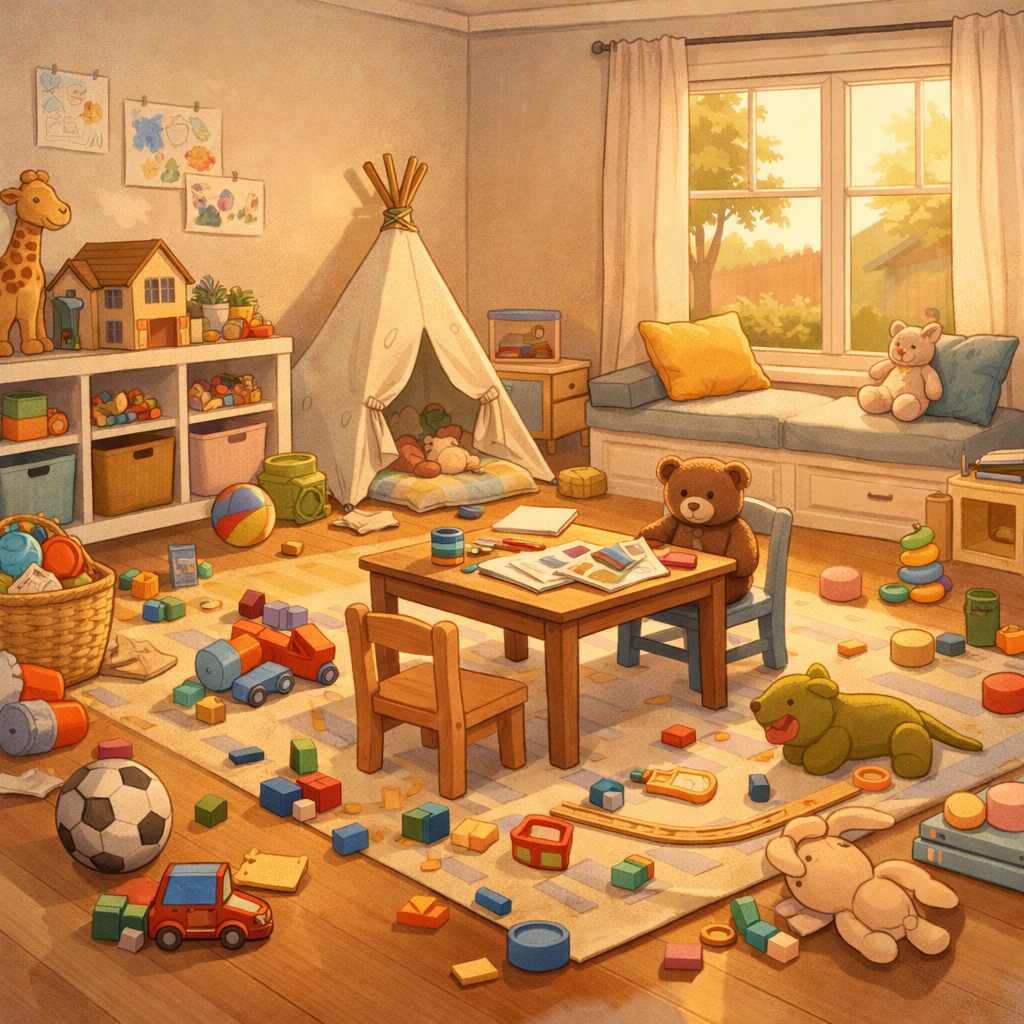
One of the most underestimated realities of upsizing with toddlers is how quickly belongings accumulate. What begins with a crib and change table soon expands to art supplies, balance bikes, winter gear, and sports equipment.
Without intentional storage, even a larger home can feel chaotic. Deep closets, accessible basement storage, built in cabinetry, and garages with room for shelving all contribute to long term organization.
When upsizing with toddlers, think beyond today’s needs. Consider whether the home can realistically support your family five to ten years from now. That forward thinking often prevents another move before you are ready.
Outdoor Space and Daily Access to Greenery
For many families, upsizing with toddlers is motivated by the desire for outdoor access. A fenced backyard allows children to move freely and parents to supervise comfortably. However, in many Toronto neighbourhoods, backyard size may be modest. In those cases, proximity to parks becomes an extension of the home.
Neighbourhoods such as High Park and The Kingsway are often valued for their established green space and family friendly atmosphere. Morning walks to the playground, splash pads in the summer, and informal gatherings with neighbours contribute to a sense of belonging.
Research continues to link regular access to green space with improved physical and emotional wellbeing in children. In a city as dense as Toronto, access to well maintained parks and recreation spaces plays a meaningful role in daily family life. The City of Toronto provides detailed information on its parks and recreation infrastructure, including playground upgrades and community programming, which can help families better understand how outdoor access varies by neighbourhood.
When upsizing with toddlers, outdoor access is not a luxury. It becomes part of everyday rhythm.

Street Design and Safety
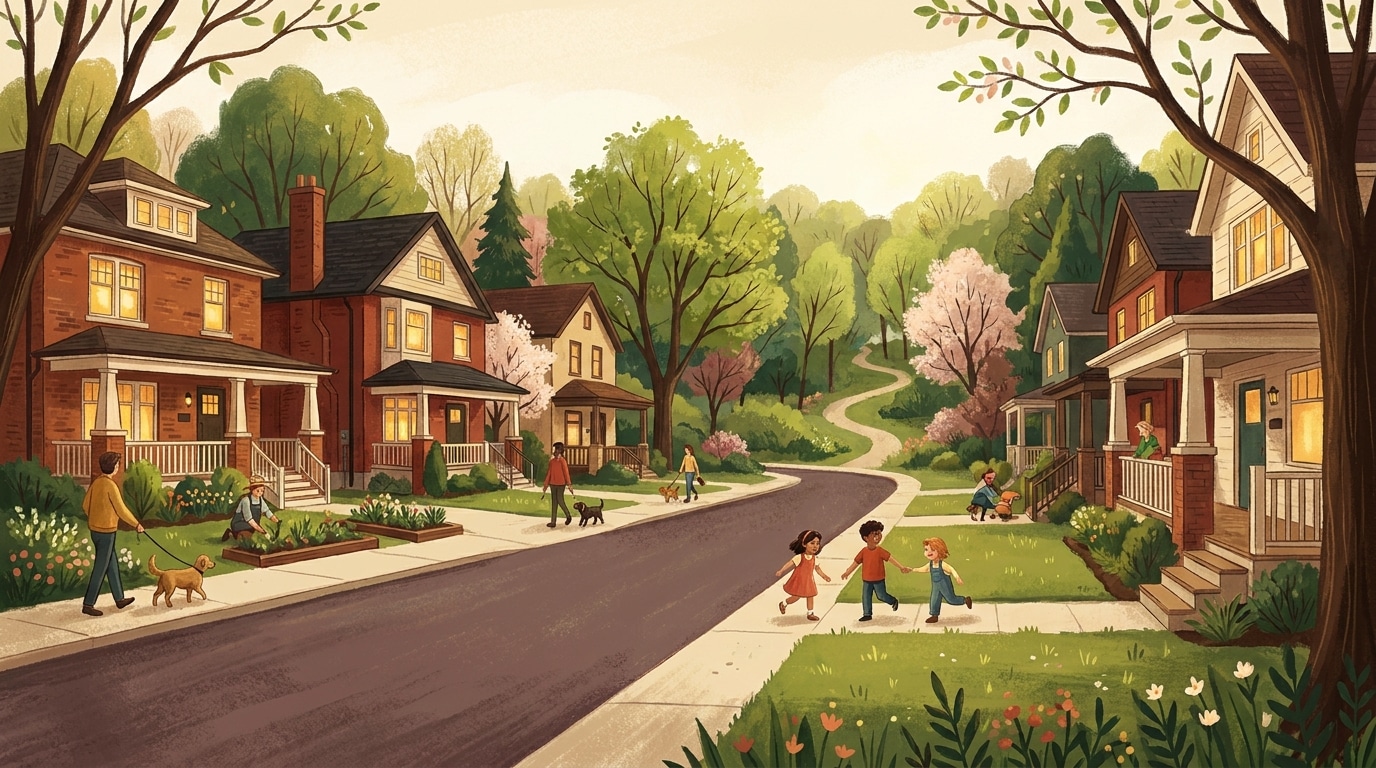
Safety considerations when upsizing with toddlers extend beyond crime statistics. Street design, traffic flow, and walkability play a central role in how secure a neighbourhood feels.
A quiet residential street in Leaside or Bedford Park may offer a very different experience than a busy arterial road nearby. Toddlers move impulsively. Reduced traffic, visible sidewalks, and an engaged community create an environment where children can gradually gain independence.
During upsizing with toddlers, it is worth looking closely at how a street is designed, not just how it looks. Traffic flow, speed limits, sidewalk width, and nearby intersections all influence how safe a neighbourhood feels day to day. The City of Toronto outlines its traffic calming initiatives and road safety measures on its website, which can provide helpful insight into how specific areas are planned and maintained as families grow.
Visit potential streets at multiple times of day. Notice traffic patterns during school drop off hours. Observe whether neighbours are outside walking dogs or supervising children. These details are central when upsizing with toddlers.
School Catchments and Long Term Value
Although kindergarten may feel distant, upsizing with toddlers benefits from early awareness of school boundaries. Homes within established school catchments often maintain consistent demand, supporting long term value.
Planning for education at the upsizing stage reduces the likelihood of another disruptive move later and helps ensure that your housing decision aligns with long term family goals. When viewed through a broader lens of timing and transition, upsizing with toddlers becomes less about reacting to space constraints and more about positioning your family for stability. For those considering how this move fits within a larger life stage shift, additional perspective on navigating transitional moments can be explored on our full blog, where move up timing and strategy are examined in greater depth.
Community Infrastructure and Everyday Flow
The toddler years are logistically complex. When upsizing with toddlers, proximity to everyday amenities can dramatically influence quality of life. Access to grocery stores, pediatric clinics, daycare centres, and libraries simplifies daily routines.
Imagine a typical weekday. Where will daycare drop off occur? Can errands be completed on foot with a stroller? Is there reliable transit if one parent commutes? When upsizing with toddlers, convenience is not superficial. It supports sustainability.
Financial Sustainability and Mortgage Planning
Upsizing often overlaps with peak childcare expenses, which means mortgage increases layered on top of daycare, insurance, property taxes, and utilities require careful modelling. Understanding how interest rate changes influence borrowing costs and monthly payments is an important part of that evaluation.
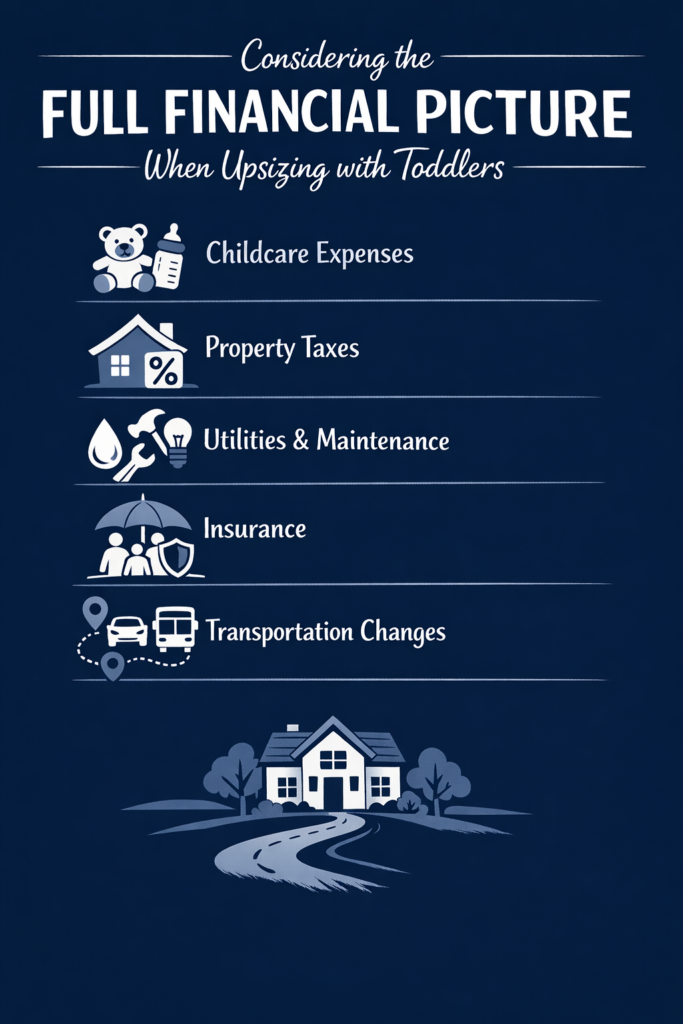
When preparing for upsizing with toddlers, consider the full financial picture:
- Childcare expenses
- Property taxes
- Utilities and maintenance
- Insurance
- Transportation changes
A larger home should not create constant financial tension. Financial breathing room supports emotional breathing room.
Flexibility for Hybrid Work and Changing Needs
Many households navigating upsizing with toddlers are also balancing hybrid or remote work arrangements, which makes spatial flexibility increasingly important. Even a modest, dedicated workspace can significantly reduce daily friction by creating clearer boundaries between professional and family life.
Homes with flex rooms that can transition from nursery to office and eventually to study area offer long term adaptability, while finished basements or secondary dens provide separation that supports both productivity and family routines as children grow.
As toddlers become school aged children, needs shift again. Selecting a home that can evolve without major renovation strengthens the long term value of your decision. Adaptability often outweighs cosmetic perfection when upsizing with toddlers.
Emotional Readiness and Timing
Beyond logistics, upsizing with toddlers carries emotional weight. Leaving a first home often means saying goodbye to early milestones and formative memories.
The move up process involves overlapping timelines, preparation, and decision making. Understanding both the selling and buying journey can ease uncertainty. For families seeking clarity around next steps, connecting with a knowledgeable advisor can provide perspective. The goal is not urgency. It is a thoughtful progression. When upsizing with toddlers feels grounded in long term planning rather than reaction, confidence naturally follows.
A Thoughtful Approach to Upsizing with Toddlers
At its core, upsizing with toddlers is not about prestige. It is about space to grow, neighbourhoods that support independence, parks that anchor daily life, and schools that provide continuity.
By prioritizing layout over size, storage over excess, infrastructure over trend, and sustainability over stretch, families position themselves for a more balanced next chapter.
Toronto offers diverse communities, from the established charm of Port Union to the family oriented calm of Willowdale. The key is not chasing the largest property available. It is selecting an environment that aligns with both present routines and future milestones.
When approached intentionally, upsizing with toddlers becomes less about pressure and more about possibility.