
Moving is a big life transition for any family, but when you’re moving with a teenager, the emotional landscape becomes more complex. Teens are in a pivotal stage of identity, independence, friendships, and routine. A move – even a positive one, like upsizing into a home with more space – can introduce feelings of loss, uncertainty, or resistance. For parents, this can come as a surprise. What feels exciting for adults may feel disruptive or overwhelming for teens.
Still, moving with a teenager doesn’t have to be a struggle. With the right approach, it can become an opportunity for growth, communication, and even empowerment. Upsizing your home can give your teen more personal space, better environments for schoolwork and hobbies, and a fresh start at a time when they are shaping their sense of self.
This guide explores what teenagers experience emotionally during a move, how parents can make the transition smoother, and the strategies that turn a potentially stressful moment into a positive family milestone.
Why Moving Feels Bigger for Teens Than It Does for Adults
When adults choose to move, they are motivated by practical reasons – more room, a better layout, a stronger neighbourhood fit, proximity to work or school, or the desire for long-term family comfort. Moving with a teenager however, means they view life primarily through the lens of social connection and identity. Their friendships, routines, and environments play an enormous role in how secure they feel day to day.
Moving with a teenager represents disruption. Even when the outcome is beneficial, the process can stir up uncertainty. Teens may worry about leaving a school they know, losing daily contact with close friends, navigating new social circles, or adjusting to unfamiliar spaces. These concerns can feel heavy, and teens often lack the language to articulate them clearly.
Understanding this emotional dynamic is the foundation of making moving with a teenager a positive experience. The goal isn’t to eliminate their concerns but to support them through the transition in ways that honour their developmental stage.
Teenagers Want Control – Even in Small Ways
A defining characteristic of teenage development is the desire for autonomy. Moving removes much of their perceived control. They aren’t choosing where the family will live, what neighbourhood you’ll move into, or when the transition happens. This lack of agency can make resistance stronger.
The key is to intentionally offer opportunities for influence when moving with a teenager. Even small decisions – choosing their room, picking design elements, helping plan the move, or giving input on neighbourhood features – can restore a sense of empowerment. When teens feel included, the move becomes something happening with them, not to them.
Teens don’t need to control everything. They just need to feel heard.
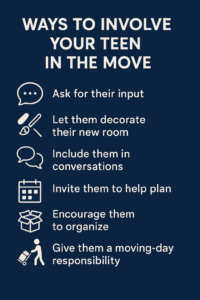
Ways to Involve Your Teen in the Move
- Ask for their input when touring homes or reviewing photos online.
- Let them choose paint colours, décor, or furniture for their new room.
- Include them in conversations about neighbourhoods, parks, and community features.
- Invite them to help plan the layout of shared spaces.
- Encourage them to organize their own packing and donate items they no longer want.
- Give them ownership of a small moving-day responsibility.
These actions build confidence and partnership during the move.
Understanding the Social Impact of Moving with a Teenager
The social environment of a teenager is central to their emotional world. Moving may mean leaving behind friends who feel like family, favourite hangouts, school clubs, or sports teams. Even if your teen is resilient and adaptable, the social consequences of moving can feel enormous.
Parents can help by acknowledging the loss directly. Instead of telling teens “You’ll make new friends,” validate the difficulty of leaving the old ones. Support them in maintaining connections through messaging, social media, video calls, or planned visits. Letting them grieve what they’re leaving makes it much easier to embrace what’s ahead.
If the moving with a teenager doesn’t require switching schools, emphasize that stability early. If it does require a school change, support a gradual transition by researching clubs, teams, or programs that align with their interests. Social anchors help teens integrate faster.
How Upsizing Can Actually Benefit Teens
Teens may initially focus on what they’re losing, but upsizing offers meaningful benefits that can enhance their daily life. Larger homes provide more personal space, which becomes increasingly important as teens seek privacy. A bigger bedroom, a dedicated workspace for school, or a quiet nook for hobbies can significantly improve their comfort and emotional well-being.
Shared family spaces also help. Teens may appreciate a larger living room, a finished basement for hanging out with friends, or a backyard that offers more room to decompress. By reframing the conversation around what the bigger home makes possible, families can help teens shift from anxiety to anticipation.
Routines Make the Transition Feel Manageable
One of the quickest ways to help a teenager settle into a new home is to re-establish routine quickly. We’re talking about the little things you can start doing during the first week in your new home. Teens thrive on structure, even if they sometimes resist it. When routines fall into place – familiar meal times, school-night habits, morning rhythms – the sense of normalcy returns faster.
Encourage your teen to help shape new routines that match the new space. Maybe their desk is now in a quieter area, helping with homework. Maybe family movie nights feel better in a bigger living room. Maybe their morning routine becomes more efficient with an extra bathroom. The key is helping them see how everyday life becomes easier in the upsized home.

Creating a Bedroom That Becomes Their Anchor Point
The bedroom is the emotional heart of a teen’s world. This is where they recharge, reflect, express themselves, and build independence. Creating a comfortable, familiar bedroom early in the move is one of the most effective ways to help them settle.
Allow your teen to decide where furniture goes, what décor feels right, and how they want the room to look. Even if you have ideas, let them take the lead. Ownership of this space becomes symbolic – a signal that they belong here.
A well-settled teen bedroom often becomes the turning point in the entire moving process.
Supporting Your Teen Through the Emotional Dip
Nearly every family experiences an emotional dip after moving – adults and teens alike. For teenagers, this dip may appear as irritability, withdrawal, sadness, or lack of enthusiasm. This doesn’t mean the move was a mistake. It means their brain is adjusting to new sensory cues, routines, and social environments.
Give your teen grace during this period. Listen more than you advise. Offer comfort without rushing them to “get over it.” Emotional transitions take time, and teens adapt at their own pace. This dip is normal – and temporary.
How Parents Can Model Positivity Without Dismissing Feelings
Teens learn more from observation than instruction. When parents model grounded optimism – acknowledging challenges while staying confident in the family’s decision – teens mirror that energy. The key is avoiding toxic positivity. Instead of saying “Everything will be great!”, try “It’s normal for this to feel difficult. We’re figuring it out together.”
This approach builds trust and emotional safety, two things teens rely on heavily during transitions.
A New Chapter Can Strengthen the Parent-Teen Relationship
Moving can become a powerful moment of connection between parents and teenagers. Shared decision-making, collaborative unpacking, and creating new memories in the home all help strengthen the bond. Teens often remember these transitional experiences vividly. When handled with care, they can grow resilience, confidence, and gratitude.
Upsizing, in particular, offers opportunities for teens to envision themselves in a bigger future. More space allows for more self-expression, more independence, and more room to explore who they are becoming.
Final Thoughts
Moving with a teenager is a special kind of challenge – one filled with emotional nuance, growing independence, and shifting identities. It’s also a moment full of potential. When families approach the transition with patience, collaboration, and open communication, moving becomes not just a logistical task but a meaningful step in your teen’s development. We’ve helped countless families navigate big moves just like this – so if you need guidance on how to navigate yours – our team is here to help.
A bigger home offers more space, but more importantly, it offers room for your teen to grow into themselves. With the right support, your move becomes a story of resilience, bonding, and new beginnings – not just for your teen, but for your entire family.