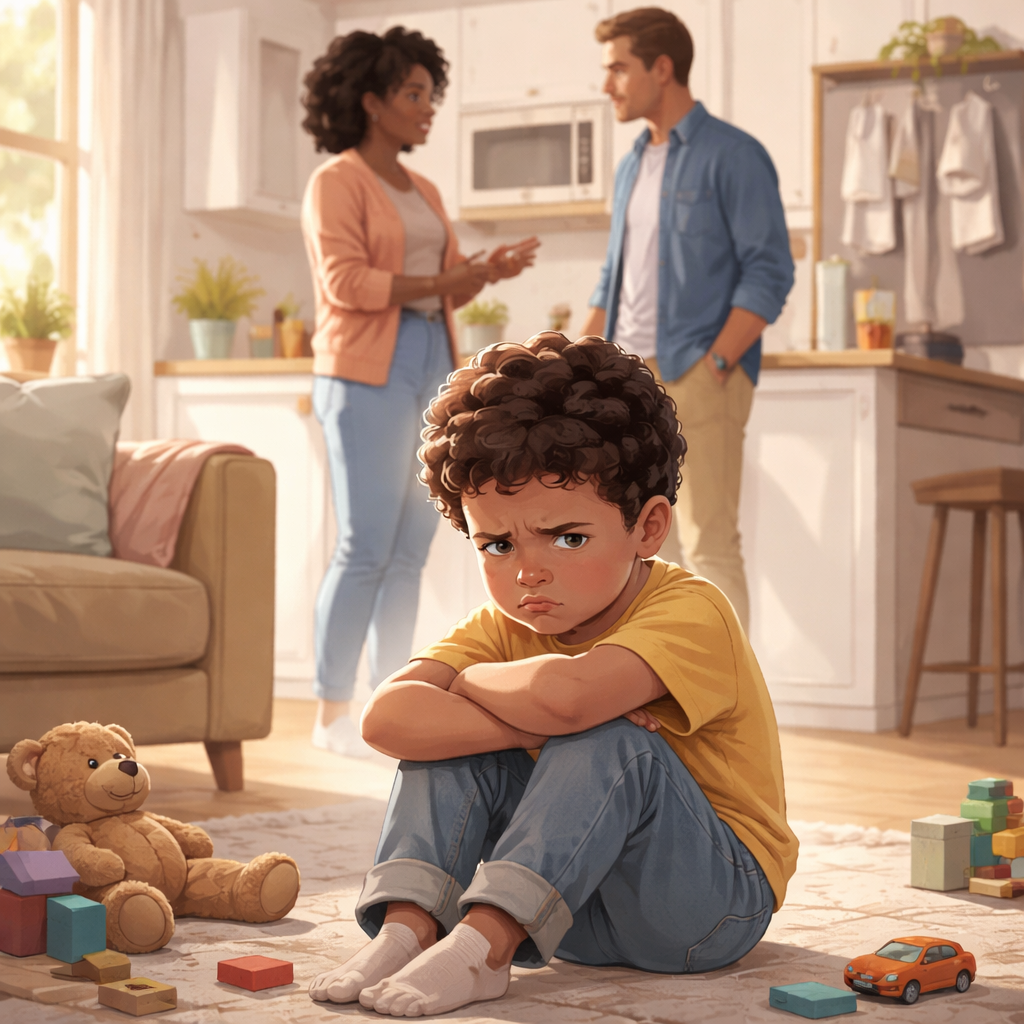
Moving is supposed to be a fresh start. More space. A better layout. A neighbourhood that fits your family’s life today – not the life you had three years ago. Yet, sometimes the most surprising part of moving is what happens after the keys are yours: your child doesn’t settle. They’re more emotional than usual. More reactive. More anxious at bedtime. Or unusually quiet, like they’re trying to cope by disappearing.
If kids aren’t adjusting to your new home, you’re not alone – and it doesn’t mean you made the wrong decision. Even “good” moves can feel like a loss to a child. Their old room, their familiar street, the neighbour they waved to, the routine they could predict – those are real attachments. Adults often experience moving as a choice and a solution. Kids often experience it as a change that happened to them.
This post offers both emotional and practical strategies you can use when kids aren’t adjusting to your new home, so your family can settle with less stress and more steadiness.
Why Moving Hits Kids Differently Than Adults
Adults tend to measure a move by outcomes: equity, schools, space, commute, lifestyle. Kids measure a move by safety and familiarity. A home is the backdrop of their identity – where they know what to expect, where their body feels oriented, where they understand the rules without thinking.
In a new environment, everything is “new.” New sounds at night. New shadows in the hallway. New neighbours. New smells. A different echo in the stairwell. Their brain is constantly scanning to figure out what’s normal, and that takes energy. When kids aren’t adjusting to your new home, it often shows up because their system is working overtime.
The simplest reframe is this: your child isn’t giving you a hard time – they’re having a hard time.
What “Not Adjusting” Can Look Like
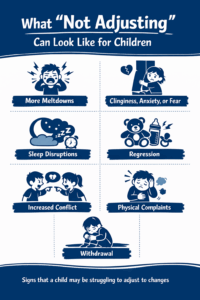
Children rarely say, “I’m grieving my previous environment and feel destabilized.” They show you through behaviour, sleep, mood, and body symptoms. If kids aren’t adjusting to your new home, you might notice changes like the following:
- More meltdowns, irritability, or emotional swings
- Clinginess, separation anxiety, or fear of being alone in the new space
- Sleep disruptions (difficulty falling asleep, nightmares, early waking)
- Regression (needing more help, baby talk, accidents after being fully trained)
- Increased sibling conflict or arguments at home
- Physical complaints like stomach aches or headaches, especially around school
- Withdrawal, shutting down, or losing interest in activities they normally enjoy
These signs can be frustrating – and also very normal. They’re often stress signals, not personality changes. Your goal is not to eliminate every big feeling. Your goal is to help your child feel safe enough to move through them.
Step One: Stabilize the Basics Before You Try to “Solve” Emotions
When kids aren’t adjusting to your new home, it’s tempting to launch into pep talks and positivity: “Look at your new room!” “We have a backyard now!” “Isn’t this exciting?” But a child who feels unsteady can’t absorb that. First, stabilize the basics: sleep, food, and predictability.
Sleep is the most important lever. Keep bedtime and wake time consistent for a few weeks even if everything else is messy. Try to keep the bedtime sequence the same: bath, story, cuddles, lights out – whatever your routine was before. Familiar order is deeply calming.
Food matters more than parents think. Moves create constant novelty; dinner doesn’t need to add to it. Bring back familiar meals and snacks for a while. “Comfort food” isn’t a step backward – it’s a regulation tool.
Predictability is what tells the nervous system it can relax. Even simple “bookends” help: a consistent morning flow and a consistent evening wind-down. When days are predictable, the new space becomes less threatening.
If you only do one thing when kids aren’t adjusting to your new home, do this: make the day feel structured, even if the house isn’t.
Build a Home Base: Make One Space Feel Settled (Fast)
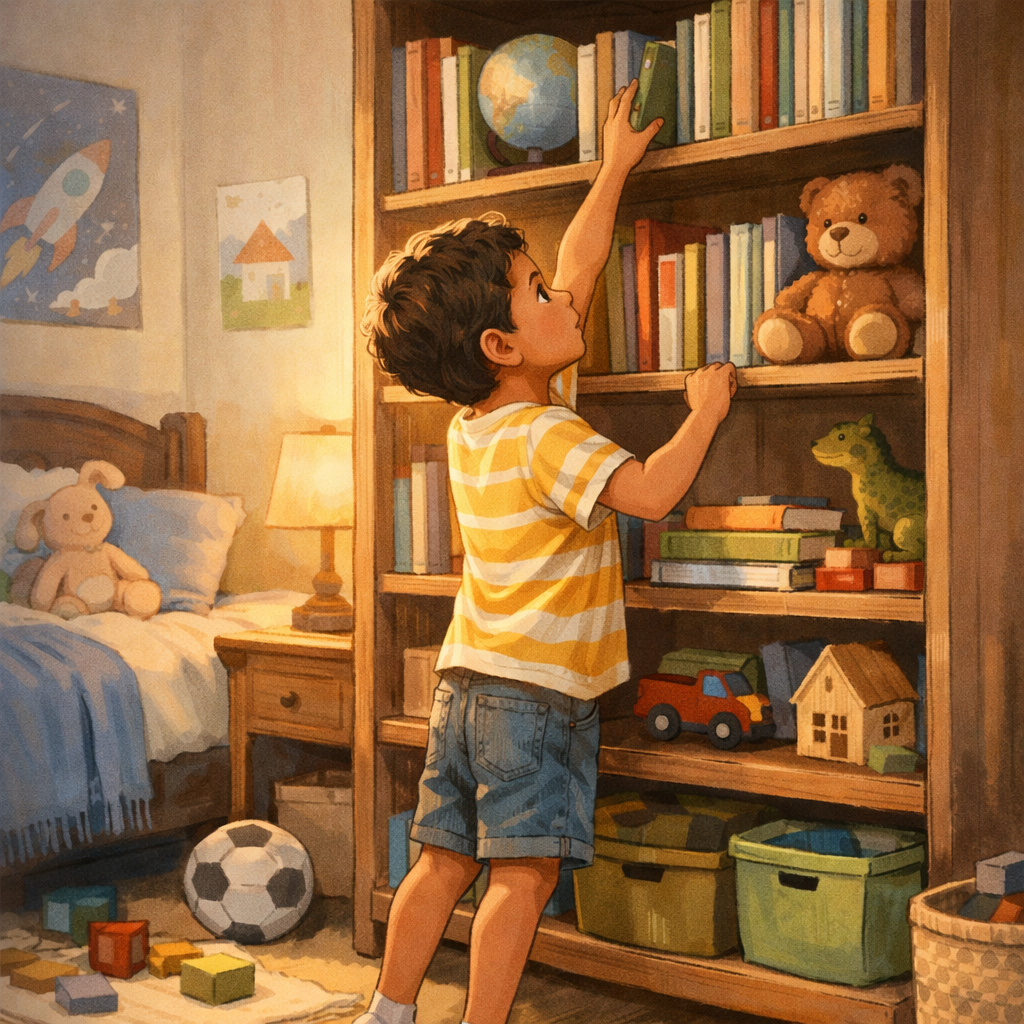
Children don’t need the whole house finished to feel better. They need one area that feels like “mine.” If kids aren’t adjusting to your new home, prioritize their room early – even if it’s not perfect.
Set up their bed right away, ideally with the same bedding and stuffed animals they already love. Put their books where they can reach them. Hang one familiar picture. If you can replicate the old room layout in any way – bed placement, nightlight location, where the favourite toy sits – do it. Familiar placement reduces the “newness” their brain is trying to decode.
If your child is old enough, give them ownership. Not a full renovation – just one choice that matters. Let them pick where the reading nook goes, or which wall gets the poster, or which blanket lives on the bed. Ownership speeds up belonging.
Don’t Rush Grief – Make Room for It
A move can trigger grief that doesn’t look like grief. It can look like anger. Irritability. “Nothing is good.” Being extra sensitive. If kids aren’t adjusting to your new home, your child may be mourning their old life while also feeling guilty about it – especially if they know you’re excited about the move.
What helps is validation without trying to fix the feeling immediately. Try:
- “I get it. You miss the old house.”
- “This feels weird because it’s still new.”
- “What do you miss the most?”
- “What feels hardest right now?”
Then pause and listen. Let the feeling exist without correcting it. When kids feel heard, their nervous system calms down. And when their nervous system calms down, the new home becomes easier to accept.
A sentence that helps many families when kids aren’t adjusting to your new home: “We can miss the old place and still make this one feel good.”
Recreate Rituals Before You Focus On Aesthetics
Parents often assume settling will happen once everything is unpacked. Kids settle through repetition, not perfection. If kids aren’t adjusting to your new home, bring back familiar rituals quickly.
Think about what made your old house feel like home: Friday movie nights, bedtime stories, weekend pancakes, evening walks, after-school snacks at the same time every day. Restart those patterns immediately, even if you’re eating pizza off paper towels at a folding table. Rituals tell a child, “Our life is still our life. We’re still us.”
Then add one “new home ritual” that belongs to this chapter: maybe hot chocolate on the porch, a weekly park visit, or a family walk to explore one new street each week. The point isn’t to distract them. The point is to attach warmth and consistency to the new environment, slowly and gently.

Help Them Learn the Neighbourhood In Small, Repeatable Loops
A child’s comfort often depends on orientation – knowing what’s around them, what to expect, and how to get there. If kids aren’t adjusting to your new home, familiarity outside the house can be just as important as comfort inside it.
Choose one or two simple “comfort loops” and repeat them until they become automatic: the walk to school, the same playground, the library, the corner store, the route to activities. Repetition reduces anxiety because it builds predictability. Along the way, name landmarks so the neighbourhood becomes a story they understand: “That’s our shortcut street,” “That’s the big tree,” “That’s the park with the climbing net.”
This is especially effective for younger kids, but it helps older ones too – because it builds confidence and independence.
School and Social Transitions: Support Without Overstepping
If your move involved a school change – or even just a new route and different peers – your child may be carrying that stress into the home. When kids aren’t adjusting to your new home, check whether school is quietly contributing.
If your child is younger, let the teacher know you recently moved and ask what they’re noticing. This isn’t asking for special treatment – it’s building a support net.
If your child is older, especially a teen, approach it with respect. Instead of “Are you making friends?” try, “What part of the day feels easiest? What part feels hardest?” Teens often open up more when they don’t feel interrogated. If you sense they need extra support, offer choices: “Do you want to handle it on your own, or would you like me to connect you with the guidance counsellor so you have someone available?”
What to Avoid When Kids are Struggling
When kids aren’t adjusting to your new home, a few well-intentioned responses can backfire.
Avoid pushing gratitude (“You should be happy – we did this for you”). Gratitude is hard when a child feels unsafe. Avoid repeatedly selling the home (“But look at your room!”) because it can make their sadness feel inconvenient. Avoid treating dysregulation as defiance; often, your child is simply overwhelmed and has fewer coping skills available.
Instead, stay steady. Calm tone. Clear boundaries. Lots of connection. Your steadiness is what teaches their body that this place is safe.
When to Seek Extra Help
Most adjustment struggles improve with time, structure, and connection. Sometimes, extra support is the right move.
Consider reaching out to your family doctor, a child therapist, or a school counsellor if kids aren’t adjusting to your new home and you notice: persistent sleep disruption that affects daily functioning, severe or escalating anxiety, school refusal, ongoing physical complaints tied to stress, or withdrawal that lasts beyond a few weeks.
Getting support doesn’t mean the move was a mistake. It means you’re responding thoughtfully to your child’s needs. If you’re still in the transition yourself – whether you’re feeling unsure about your next move, worried you chose too much change at once, or simply want guidance that’s rooted in real family experience – you can connect with realtors experienced in family upsizing to talk about your next steps.
The Bottom Line: Belonging Is Built, Not Rushed
If kids aren’t adjusting to your new home, your job isn’t to force excitement. It’s to create familiarity, predictability, and ownership – one day at a time. Stabilize sleep and routines. Set up a home base. Validate what they miss without trying to fix it instantly. Rebuild rituals. Repeat neighbourhood comfort loops. And measure progress in small wins: a calmer bedtime, a laugh in the new living room, a day with fewer blow-ups.
A house becomes home for children when it becomes predictable and personal – and when the people they trust most stay steady through the transition. With patience and consistency, that shift usually comes.