When families start thinking seriously about upsizing, one of the first decisions they face is not just which neighbourhood to move to but which property type makes the most sense. Toronto’s housing mix spans a wide range, from detached homes on quiet residential streets to semi-detached properties and stacked townhouses tucked into established communities. Each option comes with its own trade-offs, and understanding those differences can save families months of searching in the wrong direction.
This is not a ranking of which property type is best. It is a practical guide to help upsizing families in Toronto make more informed comparisons before they start booking showings.
Understanding Toronto’s Housing Mix Before You Search
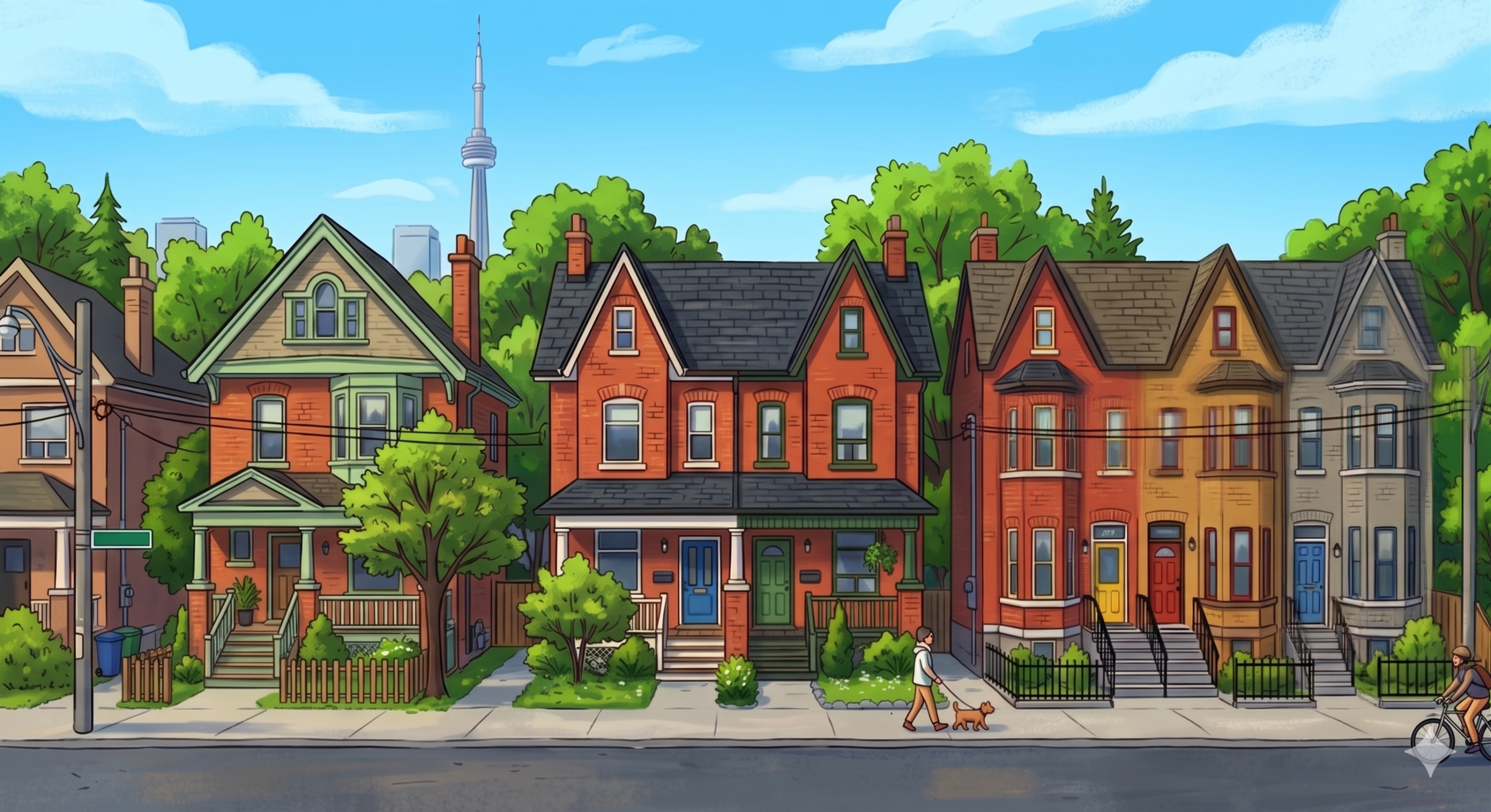
Toronto’s housing mix reflects decades of layered development. The city’s older inner-ring neighbourhoods were built with detached and semi-detached homes that prioritized community density and walkability. Postwar suburbs brought wider lots and larger detached properties. More recent development has added townhouse clusters, link homes, and freehold row houses to fill the gaps between density and affordability.
For families between 35 and 55 who are ready to move up from a condo or starter home, navigating these categories can feel more complex than expected. A property listed as a semi-detached in Bayview Village looks and feels quite different from a semi-detached in Scarborough. Similarly, a freehold townhouse in Bloor West Village will carry a very different price point and layout than a condo townhouse in a newer midrise development.
Before narrowing your search, it helps to understand what each category actually offers in terms of space, privacy, maintenance, and long-term value.
Detached Homes: The Standard for Upsizing Families
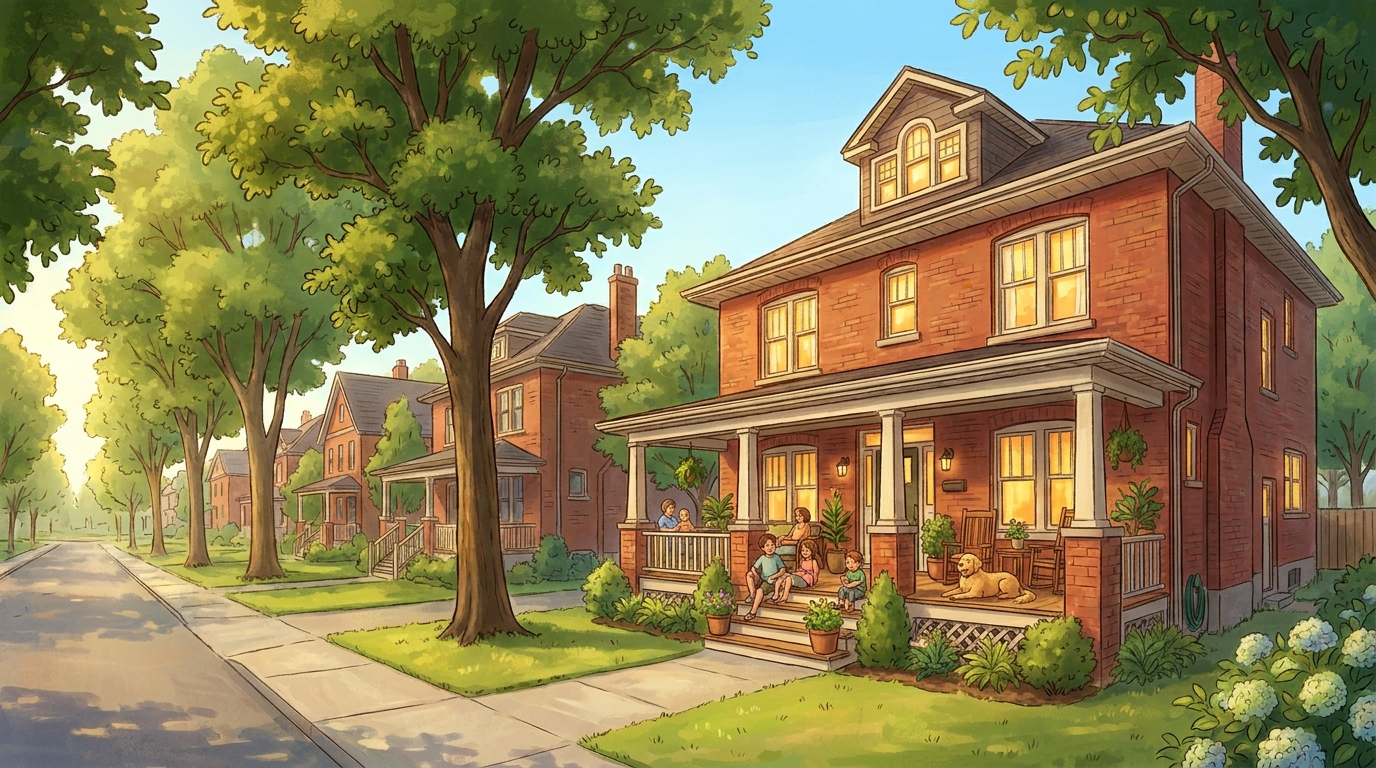
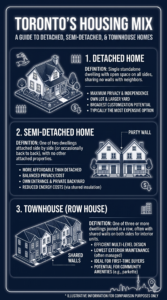
For many families, the detached home represents the clearest definition of upsizing. A fully detached property sits on its own lot, shares no walls with neighbouring homes, and typically offers the most flexibility in terms of layout, outdoor space, and future renovation potential.
In Toronto’s housing mix, detached properties command a premium. That premium is not simply about square footage. It reflects the land, the privacy, and the versatility that comes with complete ownership of a standalone structure. Families with teenagers who need separate space, professionals who work from home and require quiet, or households planning for an aging parent often gravitate toward detached homes for these reasons.
Neighbourhoods such as Leaside and Davisville Village offer detached homes with character and proximity to amenities, though inventory at any given time can be limited. Families open to exploring different pockets of the city often find that reviewing current listings across multiple neighbourhoods gives a clearer sense of what is available within their budget.
One consideration often overlooked: detached homes carry more maintenance responsibility. Roofing, exterior upkeep, and landscaping fall entirely on the owner. For dual-income families with busy schedules, that responsibility is worth factoring into the overall cost comparison.
Semi-Detached Homes: More Space Than the Price Suggests
Semi-detached properties are one of the most underrated segments of Toronto’s housing mix for upsizing families. These homes share one wall with a neighbouring property but are otherwise fully detached on the remaining three sides. Depending on the layout and neighbourhood, a semi-detached home can feel remarkably similar to a fully detached one, especially on larger corner lots or where the shared wall sits in a less central part of the home.
The financial case for a semi is often compelling. In many of Toronto’s most desirable neighbourhoods, the gap between a comparable semi-detached and a detached home can be significant. That difference can translate into a better school catchment, a more walkable community, or a shorter commute, all while staying within budget.
Sound transfer through a shared wall varies considerably depending on the age of the home and how it was constructed. Older brick homes built in the early twentieth century often have surprisingly solid party walls. Newer builds may require additional soundproofing considerations. This is worth assessing during any showing.
Families drawn to neighbourhoods like Roncesvalles orRiverdale frequently find that semi-detached properties offer an accessible entry point into communities that would otherwise stretch the budget considerably.
Townhouses: Three Distinct Categories Worth Knowing
Townhouses represent one of the more nuanced parts of Toronto’s housing mix, largely because the word covers at least three meaningfully different property types. Treating them as interchangeable leads to confusion during the search process.
Freehold townhouses are fully owned structures with no monthly maintenance fees. The buyer owns the home and the land it sits on. These are the most appealing townhouse option for upsizing families because they offer the financial transparency of a detached or semi-detached purchase without the condo fee structure. Many freehold townhouses in established Toronto neighbourhoods offer three or more bedrooms, finished basements, and private outdoor space.
Condo townhouses are legally structured as condominiums even though the physical form resembles a traditional townhouse. Buyers own their unit but share ownership of common elements. Monthly condo fees apply and can vary widely depending on the building’s age, amenities, and reserve fund status. For families coming from a condo background, this structure may feel familiar, but the ongoing fees should be calculated carefully when comparing options.
Link homes are a category that often surprises buyers new to Toronto’s housing mix. These properties look detached from the outside but are connected to a neighbouring home underground, typically through the foundation or garage. They are assessed and treated as detached homes in most cases, but the connection is worth understanding before purchase.
Families drawn to newer suburban pockets of the city, or to areas undergoing significant development, will encounter all three types. Understanding the legal structure and ongoing costs before falling in love with a property avoids difficult surprises later in the process.
What Toronto’s Housing Mix Means for Long-Term Planning
For upsizing families thinking beyond the next two years, the property type decision has implications beyond the initial purchase price. Lot size, zoning potential, and neighbourhood density all shape how a home can evolve alongside a family.
Toronto’s housing market has experienced considerable change in recent years. Long-term demand remains structurally supported by population growth and constrained land supply. Within that broader context, the type of property a family chooses tends to influence resale positioning.
Detached homes on larger lots in established neighbourhoods have historically performed well over longer holding periods, partly because land value appreciates alongside the structure. Semi-detached homes in walkable, transit-accessible areas have also demonstrated consistent demand, particularly as buyer preferences shift toward location over sheer size.
Freehold townhouses occupy an interesting middle position. They appeal to a wide buyer pool, from young professionals stepping up to families in their final move before the children leave home. That breadth of demand tends to support liquidity, even in slower market cycles.
Families approaching the move as a long-term asset decision, not just a lifestyle upgrade, benefit from thinking through how each property type fits into their broader financial picture. A knowledgeable realtor who understands both the family’s priorities and Toronto’s housing mix can help translate that thinking into a focused search.

Matching Your Family’s Needs to the Right Property Type
There is no universally correct choice within Toronto’s housing mix. The right property type depends on a combination of factors that are specific to each family: where the children are in school, how much space is needed for remote work, whether an in-law suite is a current or future requirement, and how the family balances indoor and outdoor living.
Families with younger children who prioritize backyard space and room to grow often lean toward detached or freehold townhouse options. Families with teenagers who want more separation between floors may find that a semi-detached home in the right neighbourhood delivers more than a larger townhouse with a less practical layout.
Professionals navigating hybrid schedules tend to weigh commute access and dedicated workspace more heavily. A semi-detached home in a well-connected neighbourhood like Willowdale may offer a more practical daily experience than a detached property that requires a longer drive to the office.
Multigenerational families, or those planning for a parent to eventually move in, often look specifically for properties with basement suites or flexible secondary spaces. This narrows the search but also focuses it productively.
Starting the Search With Clarity
Understanding Toronto’s housing mix is the foundation of a more efficient property search. Families who begin with a clear sense of what each property type offers, and what trade-offs come with each, spend less time on showings that do not fit and more time evaluating homes that genuinely meet their criteria.
The next step is connecting that understanding to real inventory. Exploring current listings across a range of property types and price points helps calibrate expectations against what is actually available in the market. That calibration is often the most useful thing a family can do before committing to a specific direction.
Toronto’s housing mix offers genuine options for families at different stages and with different priorities. The goal is to match the right property type to the right family at the right point in their journey. For families working through those questions, speaking with a realtor who specializes in upsizing can bring that process into focus faster than searching alone.