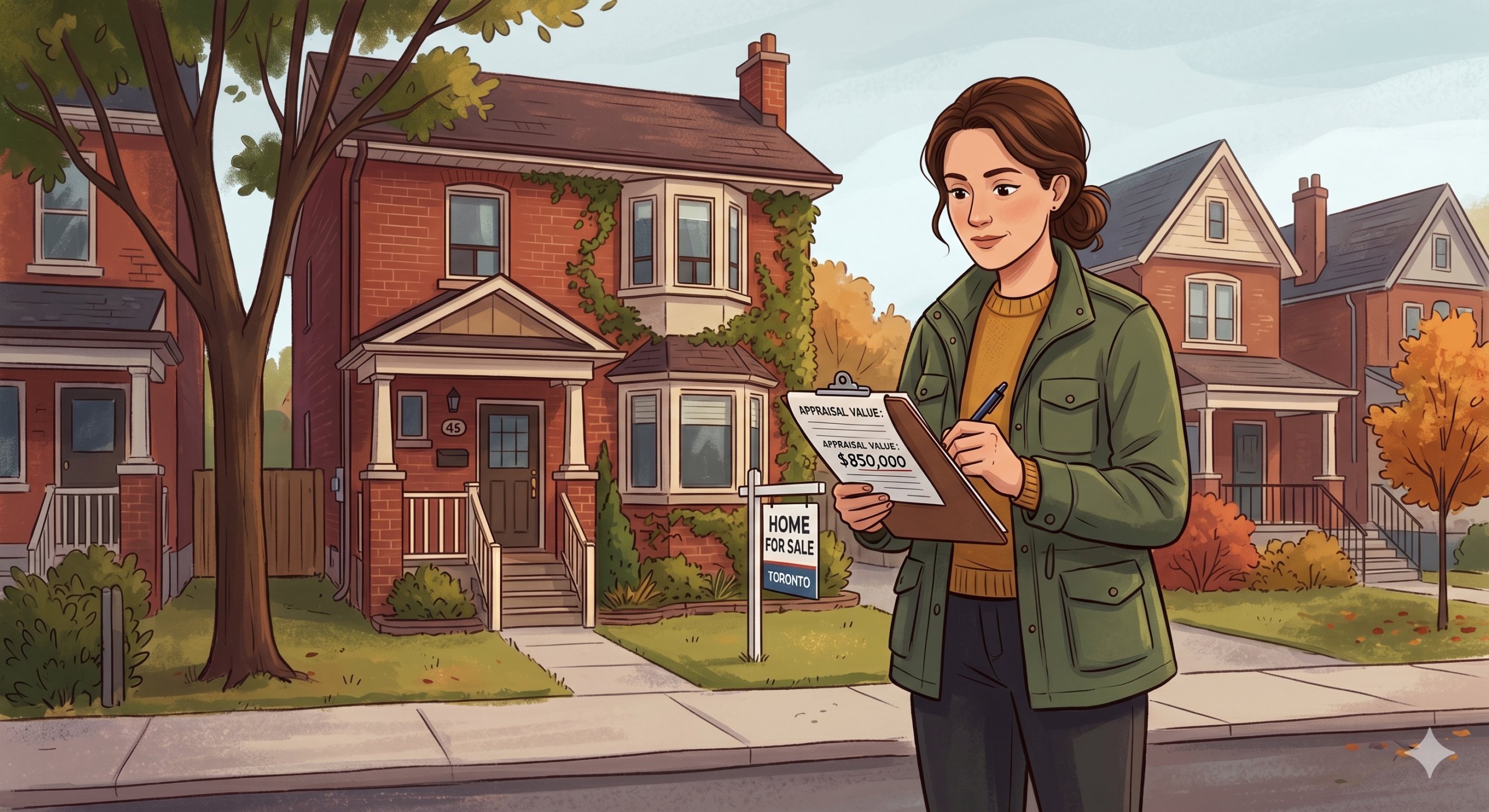
When a family decides to upsize, the financial picture can feel clear on the surface. You have equity in your current home, a new budget in mind, and a general sense of what you can afford. Then a home appraisal in Toronto enters the picture, and suddenly the numbers may look different than expected.
For upsizing families navigating both a sale and a purchase, appraisals can appear at multiple points in the process. Understanding what a home appraisal in Toronto actually measures, how lenders use the results, and what families can do to prepare will help you move through this step with fewer surprises and more confidence.
What a Home Appraisal in Toronto Actually Measures
A home appraisal in Toronto is a formal, independent assessment of a property’s market value conducted by a licensed appraiser. Unlike a home inspection, which evaluates the physical condition of a property, an appraisal focuses specifically on value. The appraiser’s job is to determine what the property would reasonably sell for on the open market at the time of assessment.
Appraisers arrive at their valuation using a methodology that accounts for the property’s size, condition, location, and features alongside recent comparable sales in the immediate area. These comparables, often referred to as comps, are properties that have sold within a defined geographic range and time period and share similar characteristics with the subject property.
In Toronto, where neighbourhoods can differ dramatically from one street to the next, the selection of accurate comparables is one of the most consequential parts of the process. A home appraiser working in Caledonia Fairbank will draw on a very different pool of comparables than one working in Scarborough, even if the homes themselves are structurally similar.
When a Home Appraisal in Toronto Is Required
The most common trigger for a home appraisal in Toronto is mortgage financing. When you apply for a new mortgage or refinance an existing one, your lender needs to confirm that the property being used as collateral is worth at least as much as the loan amount being requested. The appraisal is how they verify that.
For upsizing families, this typically comes up in two distinct situations. The first is on the purchase of the new, larger home. Before your lender advances the mortgage funds, they will often commission a home appraisal in Toronto to confirm the purchase price reflects genuine market value. If the appraised value comes in lower than the agreed purchase price, the lender may only advance a mortgage based on the appraised figure, leaving you to cover the gap with additional funds.
The second situation is on the sale side, particularly when your current home is being used to support bridge financing or when a buyer’s lender orders their own appraisal as part of underwriting. Understanding that both transactions can be subject to appraisal review helps upsizing families plan for contingencies in advance.

How an Appraisal Differs From a Market Evaluation
Many families confuse a home appraisal in Toronto with a comparative market analysis, or CMA, provided by a real estate professional. While both involve assessing a property’s value, they serve different purposes and carry different weight.
A CMA is a tool used by realtors to help sellers price their home strategically. It draws on recent sales, active listings, and expired listings to suggest a competitive price range. It is not a formal document and carries no regulatory standing with lenders.
A home appraisal in Toronto, by contrast, is a regulated report produced by an accredited professional, typically a member of the Appraisal Institute of Canada. It follows a standardized methodology, includes detailed documentation, and is the form of valuation that mortgage lenders will actually rely on when making lending decisions. For upsizing families, both tools are useful, but they inform different decisions at different stages of the process.
Your realtor’s market evaluation helps you price your home to sell. The appraisal helps your lender determine how much they are willing to finance on either side of the transaction. Knowing the distinction prevents confusion when the numbers from each source do not perfectly align.
What Happens When the Appraisal Comes in Low
A low appraisal is one of the more stressful scenarios a buyer can encounter, particularly when purchasing a larger home at a premium price point. If a home appraisal in Toronto returns a value below the purchase price, the lender will base the mortgage on the appraised amount rather than the contract price.
For example, if you have agreed to pay $1.8 million for a property and the appraisal comes in at $1.7 million, your lender may only advance a mortgage based on the lower figure. This creates an immediate shortfall that must be resolved before the transaction can close.
Families in this situation typically have a few options. They can negotiate with the seller to reduce the purchase price to the appraised value. They can make up the difference using additional cash or other liquid assets. Or, in some cases, they can request a second appraisal if there is reason to believe the first was based on inaccurate comparables or missing information about the property.
Working with a realtor who understands how to structure offers with appropriate conditions can provide meaningful protection here. Families who are actively reviewing listings and evaluating properties benefit from having representation that anticipates appraisal risk before an offer is signed.

How to Prepare Your Home for an Appraisal
When the home appraisal in Toronto relates to the property you are selling, there are practical steps you can take to support a strong result.
Appraisers are professionals and will not be swayed by staging or presentation alone. However, they do take condition into account. A home that has been well maintained, with no deferred repairs or visible deficiencies, will naturally support a stronger valuation than one where issues are evident. Attend to anything that could signal neglect: leaky faucets, damaged flooring, peeling exterior paint, or an overgrown yard.
Documentation also matters. If you have completed significant renovations or improvements, gather permits, invoices, and contractor records. An appraiser can only assign value to what they can verify. Improvements that are visible and documented carry more weight than those the seller simply claims were done.
It is also worth ensuring that the appraiser has access to all areas of the property and that the home is reasonably tidy. Cluttered or inaccessible spaces make it harder for the appraiser to assess square footage and condition accurately, which can result in a more conservative valuation.
The Role of Market Conditions in a Toronto Appraisal
Toronto’s real estate market does not move in a straight line, and the timing of a home appraisal in Toronto can meaningfully influence its outcome. In a rising market, where prices are climbing quickly, appraisals sometimes lag behind current conditions because comparables from recent weeks or months reflect an earlier price level.
In a cooling or shifting market, the reverse can occur. Comparables from the recent past may reflect higher prices than what the market is currently supporting, which can create tension between what a seller expects and what the appraisal confirms.
Upsizing families who are thinking through their long-term plans and timing benefit from understanding where the market is trending at the time they intend to transact. A home appraisal in Toronto conducted during a period of price stability tends to produce more predictable results than one completed during rapid movement in either direction.
This is one reason why close collaboration between your realtor and your mortgage professional matters. Your realtor tracks current market conditions and comparable sales activity. Your mortgage professional understands how your lender will interpret the appraisal. When those two perspectives are aligned, families can anticipate potential gaps before they become closing-day complications.
Appraisals and Refinancing Your Current Home
Some upsizing families do not simply sell their current home and purchase a new one. In certain situations, particularly when a family is considering converting their existing property to a rental or using it as a secondary asset, refinancing may be part of the financial strategy.
A home appraisal in Toronto is a prerequisite for any refinancing. The lender needs to establish the current value of the property before determining how much additional equity can be accessed. For families with significant appreciation in their current home, a strong appraisal can unlock meaningful capital that supports the purchase of a larger property.
It is worth speaking with a mortgage professional about how a home appraisal in Toronto fits into the refinancing process before making commitments on either side. The sequencing of these steps matters, and misordering them can create delays or limit the available options.
Who Pays for a Home Appraisal in Toronto
In most residential transactions, the cost of a home appraisal in Toronto is borne by the buyer. Lenders typically order the appraisal and pass the cost along, or instruct the buyer to arrange and pay for it directly. The fee generally falls between $300 and $600 for a standard residential property, though this can be higher for larger or more complex homes.
It is important to understand that even though the buyer pays for the appraisal, the report is prepared for the lender, not the buyer. The lender is the client of record. As a buyer, you may or may not receive a copy of the full report, depending on your lender’s policy, though you can typically request it.
On the sale side, appraisals ordered by the buyer’s lender are entirely the buyer’s responsibility. As a seller, you have no input into that process and may never see the results, though any issues identified could surface through the negotiation if the buyer encounters financing challenges.
Building Appraisal Awareness Into Your Upsizing Plan
A home appraisal in Toronto is not a bureaucratic hurdle. It is a substantive step in the transaction that can influence your borrowing capacity, your negotiating position, and the timeline of your move. Treating it as an afterthought creates avoidable risk.
Upsizing families are best served by understanding how the appraisal fits into both sides of their transaction well before they reach the offer stage. That means asking your mortgage professional how appraisal risk is managed on the purchase, considering what your current home’s appraisal might look like in current conditions, and working with a realtor who can help you price and present your property in a way that supports a strong result.
The families who navigate the appraisal process most smoothly are typically those who have built a team around them early. A realtor, mortgage professional, and legal counsel who are all familiar with the upsizing process and who communicate with each other can anticipate and resolve most appraisal-related complications before they become problems.
Upsizing in Toronto involves more moving parts than most families anticipate. If you want a clearer sense of where your current home stands and what a larger purchase might realistically look like, speaking with a realtor who specializes in upsizing is a straightforward next step.