Buying or changing homes is rarely just a financial decision. For couples, it is one of the most emotionally layered choices they will make together. Differing priorities, timelines, and personal histories can quickly turn practical conversations into sources of tension. Learning how to make housing decisions as a couple without resentment is less about compromise in the moment and more about alignment over time.
For upsizing families in Toronto, housing decisions often arrive alongside career growth, parenting demands, and long-term financial planning. These pressures can amplify disagreements, especially when each partner views the home through a different lens. Understanding how to make housing decisions as a couple in a way that protects both the relationship and the lifestyle you are building is essential.
This article explores why resentment shows up during housing decisions, how couples can navigate differing priorities, and what it looks like to move forward together with clarity and confidence.

Why Housing Decisions Feel So Personal
A home represents far more than shelter. For many people, it is tied to identity, security, and future expectations. One partner may see a home primarily as a financial asset, while the other views it as a place of comfort and emotional safety. Neither perspective is wrong, but when they are not acknowledged openly, friction can build.
When couples attempt to make housing decisions as a couple without naming these underlying values, conversations often stall around surface-level details like square footage or price. In reality, the disagreement is usually about risk tolerance, stability, or long-term vision. Recognizing this distinction early can prevent misunderstandings from hardening into resentment.
Common Sources of Resentment in Housing Choices
Resentment rarely appears all at once. It tends to accumulate through small compromises that feel one-sided or unspoken. In housing decisions, this can show up when one partner feels pressured to move sooner than they are ready, stretch the budget beyond their comfort level, or leave a neighbourhood they love.
For many couples, resentment also emerges when roles feel unequal. If one partner handles most of the research, scheduling, or communication, they may feel burdened or unheard. Conversely, the other partner may feel disconnected from the process and less invested in the outcome. These dynamics make it harder to make housing decisions as a couple that feel balanced and shared.
Aligning on the Bigger Picture First
Before discussing listings, neighbourhoods, or budgets, couples benefit from aligning on their broader goals. Housing decisions sit within a much larger context that includes career trajectories, family plans, and lifestyle priorities.
Conversations that support couples who want to make housing decisions as a couple tend to focus first on questions like how long they expect to stay in the next home, what stability means for their children, and how housing fits into their overall financial plan. When these answers are shared openly, many surface-level disagreements resolve more easily.
Timing Matters More Than Perfection
One of the most common points of conflict between partners is timing. One person may feel ready to move, while the other prefers to wait for more certainty. This difference can be particularly pronounced during market fluctuations or major life transitions.
Rather than framing timing as right or wrong, those who successfully make housing decisions as a couple treat timing as a variable to be evaluated together. Discussing what would make each partner feel comfortable moving forward, whether that is financial benchmarks, school milestones, or career stability, creates a shared decision-making framework.
The Role of Neighbourhood Fit
Neighbourhood choice often carries emotional weight. Proximity to friends, family, schools, and familiar routines can be just as important as the home itself. When partners have different attachments to specific areas, tension can arise.
In Toronto, neighbourhoods like Amesbury often appeal to couples seeking long-term family stability, while areas such as The Corso Italia may attract those prioritizing walkability and lifestyle amenities. Exploring neighbourhood options together, using resources that outline schools, transit, and community features, helps couples ground their preferences in shared criteria. This approach supports partners trying to make housing decisions as a couple without framing the discussion as a win or loss.
Exploring neighbourhood profiles can also surface options that neither partner initially considered, expanding the sense of possibility rather than narrowing it.

Financial Transparency Reduces Emotional Strain
Money is one of the most common sources of stress in relationships, and housing decisions amplify this pressure. Couples often enter discussions with different assumptions about affordability, risk, and long-term financial security.
To make housing decisions as a couple without resentment, financial transparency is critical. This includes openly discussing comfort levels around mortgage size, renovation costs, and long-term expenses. According to the Financial Consumer Agency of Canada, couples who engage in regular financial conversations report higher confidence in major financial decisions.
Aligning on financial boundaries does not require identical viewpoints, but it does require mutual respect for each partner’s limits.
When Compromise Feels Uneven
Compromise is often framed as the goal of joint decision-making, but not all compromises feel equal. When one partner consistently gives up more, resentment can quietly take root.
Partners who successfully make housing decisions as a couple tend to revisit compromises over time. They acknowledge what each person is giving up and look for ways to rebalance in other areas, whether through future renovations, neighbourhood trade-offs, or timeline adjustments. Naming compromises openly helps prevent them from becoming unspoken grievances.
Using One Practical Framework
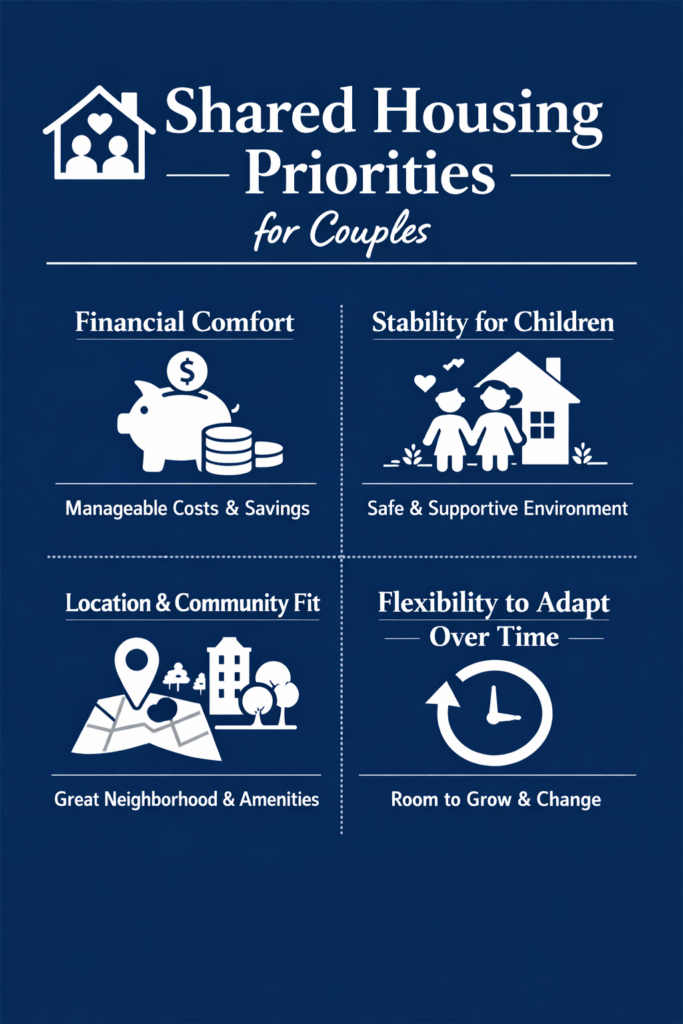
When conversations feel stuck, a simple shared framework can help couples move forward. This does not need to be complex, but it should be agreed upon by both partners. Many couples find it helpful to evaluate housing options through a limited set of shared priorities.
These priorities often include:
- Long-term affordability and financial comfort
- Stability for children and daily routines
- Location and community fit
- Flexibility to adapt over time
Limiting the list keeps discussions focused and supports couples who want to make housing decisions as a couple without getting lost in endless comparisons.
External Perspectives Can Help
Sometimes resentment grows because couples feel isolated in their decision-making. Seeking external perspectives can bring clarity and reduce pressure within the relationship.
The American Psychological Association suggests that couples who seek neutral guidance during major life decisions experience lower relationship stress. This does not mean handing decisions over to others, but rather using expert insights to inform conversations.
Reviewing current market options together can also ground expectations in reality rather than assumptions. Shared information creates a common starting point for discussion.
Revisiting the Decision as a Team
Housing decisions do not end once an offer is accepted. How couples reflect on and adapt to their choice plays a significant role in preventing long-term resentment.
Couples who continue to make housing decisions after moving in tend to reassess what is working and what is not. This might include discussing future renovations, school changes, or eventual moves. Treating the home as a shared project rather than a final verdict keeps the relationship dynamic and collaborative.
Building Trust Through the Process
At its core, learning how to make housing decisions as a couple without resentment is about trust. Trust that each partner’s concerns are valid, that compromises are shared, and that the relationship matters more than any single property.
Couples who approach housing decisions with curiosity rather than defensiveness are better equipped to navigate disagreement. They recognize that alignment is built through conversation, patience, and a willingness to revisit decisions as life evolves.
A Long-Term Perspective
Housing choices are rarely perfect, but they can be purposeful. When couples focus on shared values, transparent communication, and realistic expectations, resentment loses its foothold.
For couples navigating these decisions, having access to thoughtful market insight and neighbourhood context can support clearer conversations. Engaging with experienced local professionals can help couples feel informed rather than pressured as they weigh their options.
Ultimately, the goal is not to avoid disagreement, but to make housing decisions as a couple in a way that strengthens trust, supports family life, and leaves room for growth.