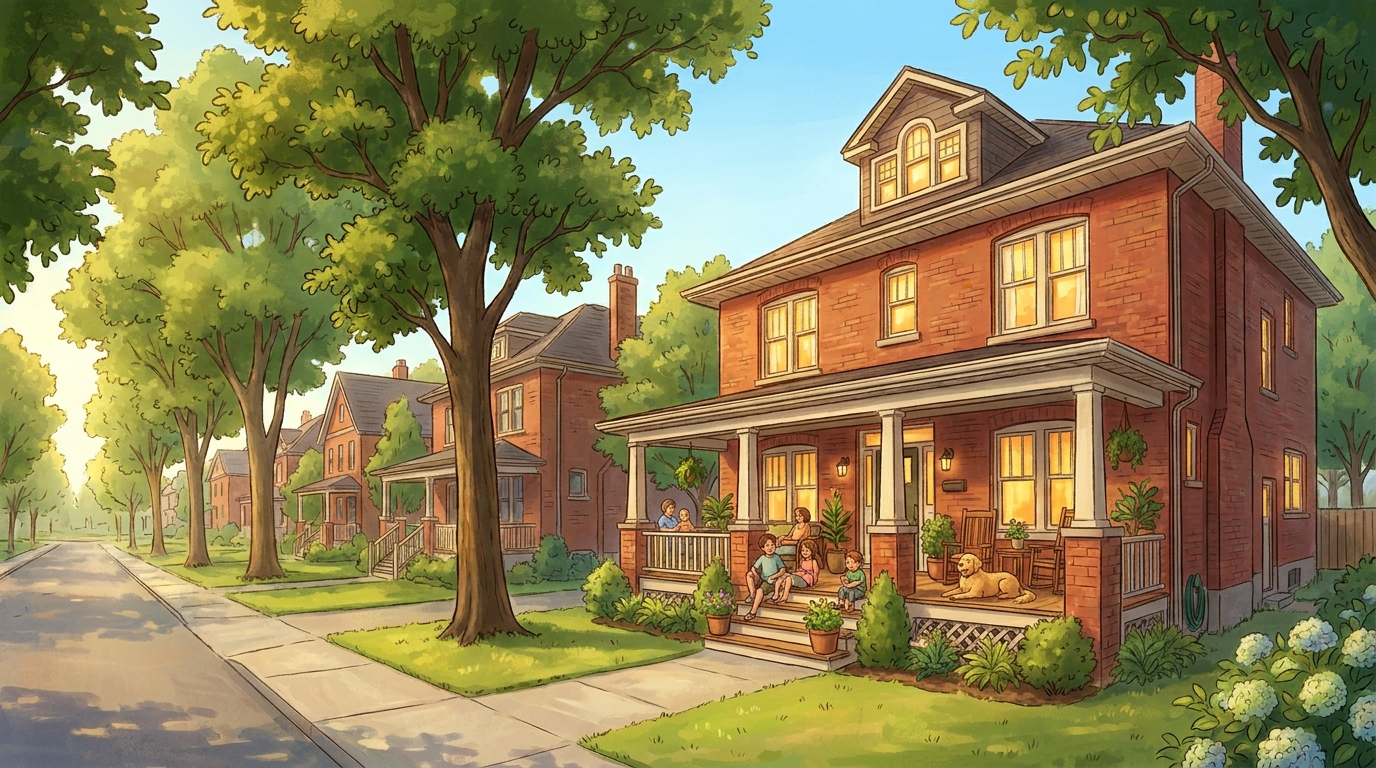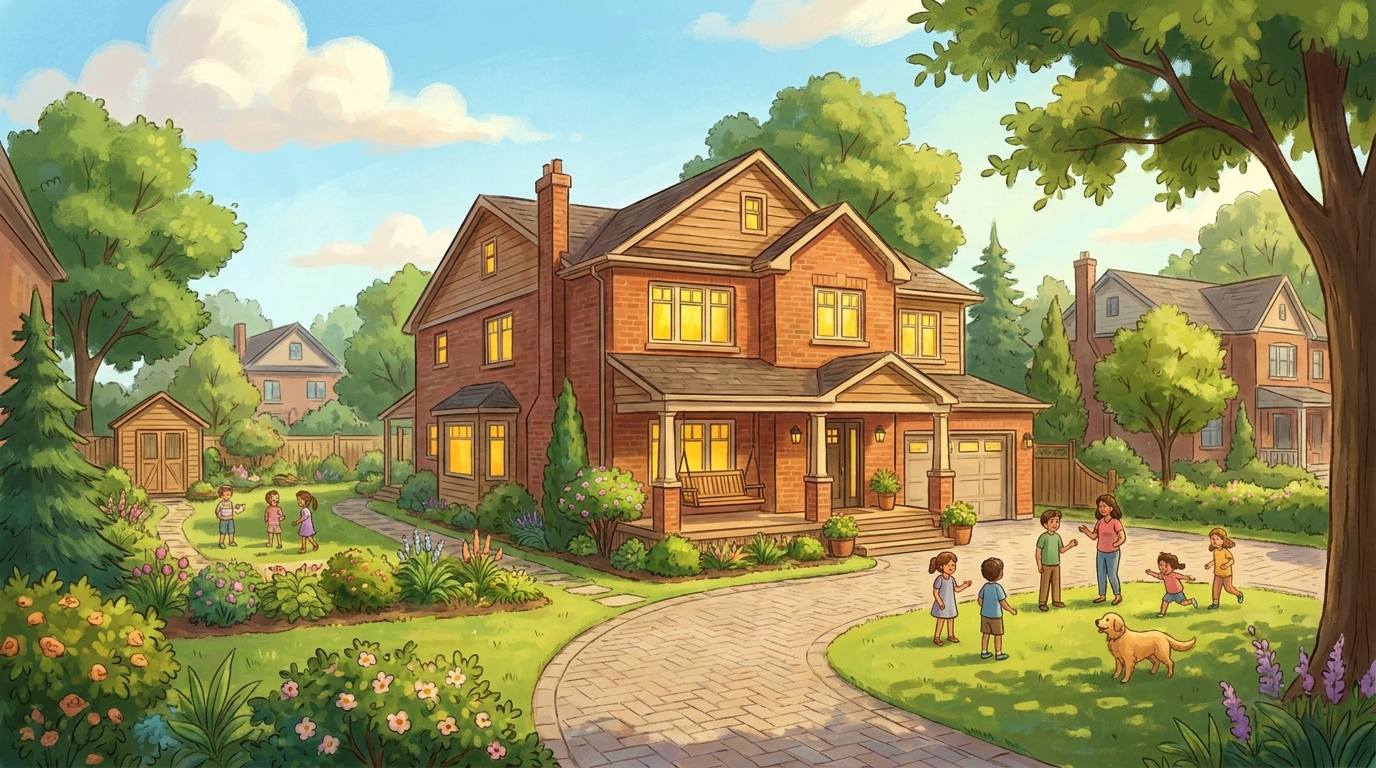
Your family has outgrown the house. The kids need their own rooms, the kitchen feels tight, and everyone competes for one bathroom. So you face the classic fork in the road: renovate or move. Both paths can get you the space you need. Both come with real costs that many Toronto families underestimate.
At The Halyard Group, we help GTA families weigh this decision every week. Below, we break down the true numbers on each side. Then we give you a simple framework to decide with confidence.
The Two Paths, Side by Side
First, let’s be clear about what each choice between a renovate or move really means. Renovating keeps you in your neighbourhood but tests your patience and your budget. Moving up gets you finished space faster, yet it triggers meaningful transaction costs.
Neither choice to renovate or move is automatically cheaper. The right answer depends on your lot, your timeline, and your family stage. Let’s start with the cost of staying put.
What a Major Addition Really Costs
A serious addition in Toronto is more than construction. You also pay for design, permits, financing, and months of disruption. Here is a realistic breakdown for a second-storey addition or large rear extension on a mid-sized home.
- Design and architecture: roughly 20,000 to 45,000 dollars
- Permits and city fees: several thousand dollars, plus time (see the City of Toronto for current permit guidance)
- Construction: often 400 to 700 dollars per square foot for quality work
- Financing: interest on a HELOC or construction loan while you carry the project
- Temporary housing: if the home becomes unliveable for months
For a 600-square-foot addition, construction alone can run 250,000 to 400,000 dollars before extras. Add design, permits, and financing, and a major project frequently lands between 350,000 and 500,000 dollars. Timelines of nine to eighteen months are common once you factor in approvals and weather delays.
The Resale Ceiling Nobody Talks About
Here is the part families miss. Every street has a price ceiling. You can pour half a million dollars into a home, but the neighbourhood may not return it at resale.
A beautifully renovated home in East York will still sell within East York’s range, not Lawrence Park’s. So before you renovate, you must know your street’s realistic top value. If your finished home would sit near or above that ceiling, moving up may protect your money better.
By contrast, an under-improved home on a strong street in Riverdale or Cabbagetown often has room to grow. There, a smart renovation can add real, recoverable value.
What Moving Up Really Costs
Now let’s look at the other side. When you’re deciding whether to renovate or move, (and you choose move) – the big costs are transactional. They are easier to predict than a renovation, which is one reason many families prefer them.
Toronto buyers pay two land transfer taxes: one provincial and one municipal. On a larger home, this becomes a significant number. You can review the details on our guide to land transfer tax and confirm current rates through Ontario’s land transfer tax page.
A Worked Example: Moving From 1.4M to 2.2M
Imagine a family selling a 1.4 million dollar home and buying a 2.2 million dollar upsize. Here is a rough view of the costs to move.
| Cost item | Approximate amount |
|---|---|
| Toronto + Ontario land transfer tax (on 2.2M) | ~ 75,950 dollars |
| Real estate commission on the sale | ~ 35,000 to 50,000 dollars |
| Legal fees (buy and sell) | ~ 3,000 to 5,000 dollars |
| Moving, staging, and prep | ~ 8,000 to 20,000 dollars |
| Estimated total | ~ 122,000 to 151,000 dollars |
These figures are illustrative, so treat them as a starting point rather than a quote. Still, the pattern holds. Moving up in Toronto typically costs six figures once every line item is counted.
Comparing the Two Totals Between Choosing to Renovate or Move
In our example, the addition might cost 400,000 dollars and take a year of upheaval. The move might cost 135,000 dollars and deliver finished space in weeks. On pure numbers, moving often looks cheaper than a large addition.
However, moving does not add square footage to a home you love. Renovating lets you stay on a street your family already treasures. That trade-off is exactly why the decision of whether to renovate or move feels hard.
A Simple Framework to Decide
Numbers alone will not settle it. So we use three questions to help families choose whether to renovate or move. Answer these honestly, and the path usually becomes clear.
1. Does Your Lot Have Real Potential?
Some lots reward a renovation and some do not. A wide lot with a deep backyard invites a smart addition. A narrow lot hemmed in by neighbours limits what you can build affordably.
Zoning matters too. Toronto’s rules on setbacks, height, and floor area shape what is possible. When the lot cooperates and the street has headroom, renovating can be a strong play.
2. What Is Your Family Stage?
Think about the next five to ten years, not just today. A family with toddlers has a different runway than one with teenagers heading to university soon.
If you plan to stay fifteen years, a renovation’s cost spreads across many happy years. If your family will shrink again in five years, absorbing 400,000 dollars in construction rarely pays off. In that case, moving up temporarily, or right-sizing, may serve you better.
3. How Long Will You Really Stay?
Length of stay is the quiet deciding factor for deciding whether to renovate or move. Short horizons favour moving, because you avoid pouring money into value you cannot recover. Long horizons favour renovating, because you enjoy the space for years and let it appreciate.
Here is a quick rule of thumb we share with clients when they are weighing the pros and cons of whether to renovate or move.
- Staying under 5 years: lean toward moving up or a modest refresh
- Staying 5 to 10 years: compare carefully; either can win
- Staying 10+ years on a strong lot: a major renovation often makes sense
Of course, life rarely fits neat boxes. That is where a tailored conversation helps you pressure-test your own numbers and decide whether to renovate or move.
Where Off-Market Homes Change the Math
Many families lean toward renovating in the renovate or move decision battle because the homes they want never seem to appear on the public market. Yet more inventory exists than the listings show. A small share of GTA sales happen privately, roughly around five percent by most industry estimates, so these homes rarely reach the portals.
Through our network, we connect upsizing families with off-market family homes before they list publicly. Sometimes the perfect upsize in Bedford Park or The Kingsway is available quietly. When that happens, moving up can suddenly beat a costly, disruptive addition.
You can learn more about our team and how we source these opportunities for east-end and central GTA families.
Financing and Timing Considerations
Both paths on whether to renovate or move depend on financing, and rates shape the decision. A renovation on a HELOC exposes you to variable costs over a long build. A move locks in a mortgage on a known purchase price. You can track the broader rate picture through the Bank of Canada and market trends through the Toronto Regional Real Estate Board.
Frequently Asked Questions
Is renovating always cheaper than moving? No. A large addition often rivals or exceeds the cost of moving up, especially once you count design, permits, financing, and disruption.
How do I know my street’s resale ceiling? A comparative market analysis of recent sales on your block and in comparable homes gives a reliable range. We prepare these for clients regularly.
What about a smaller renovation instead of an addition? A focused kitchen or bathroom refresh is a different question entirely. Cosmetic updates cost far less and can improve daily life without the scale of a structural addition.
Does Ontario real estate law affect this decision? Your obligations as a buyer and seller fall under TRESA, Ontario’s real estate legislation, which governs how we advise and represent you throughout.
Let’s Compare Your Numbers Together
Every family’s answer is different, because every lot, budget, and timeline is different. That is why a generic rule can only take you so far on the decision to renovate or move. A tailored move-versus-renovate assessment shows you the real numbers for your home and your goals.
Ready to decide on whether to renovate or move with clarity? Book a call for a tailored assessment, and we will map both paths with honest figures. No pressure, just a clear plan for your next move.
Not intended to solicit those currently under contract.