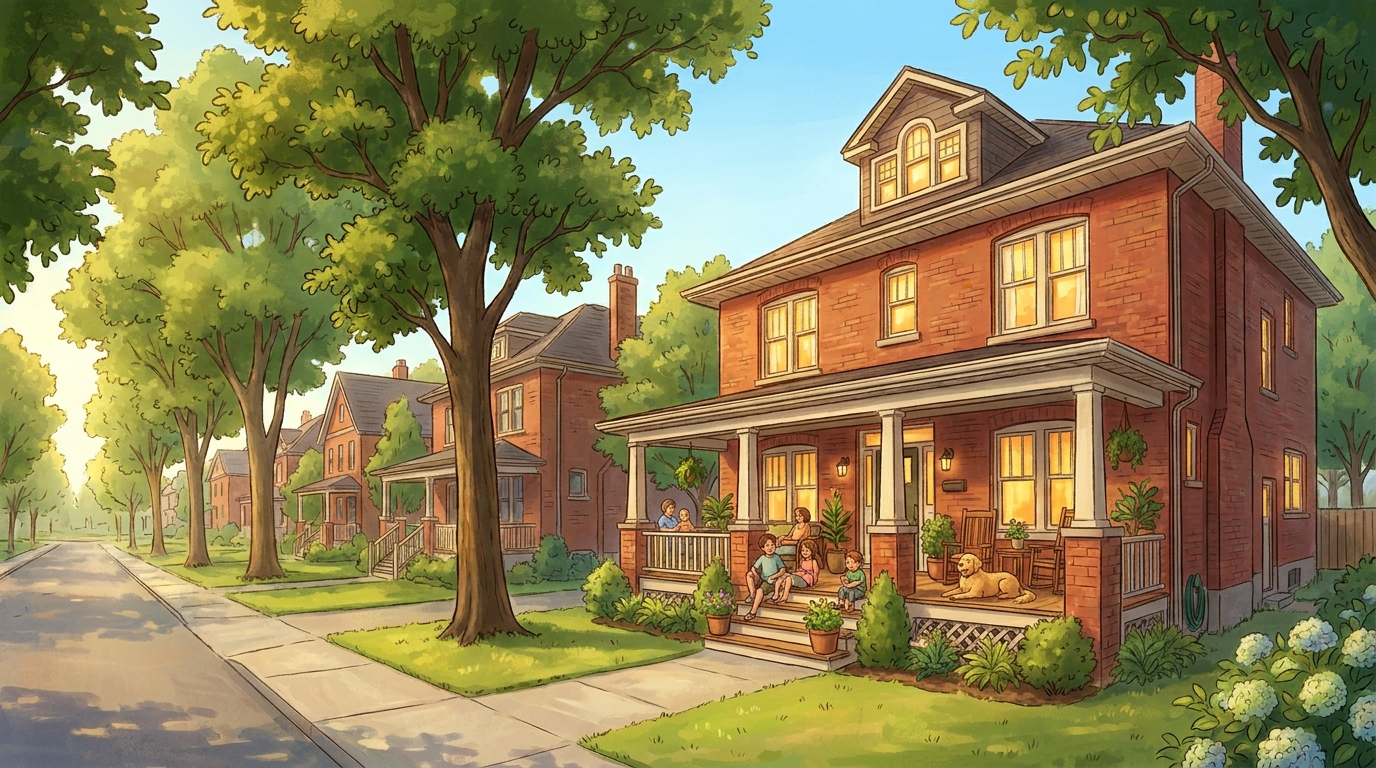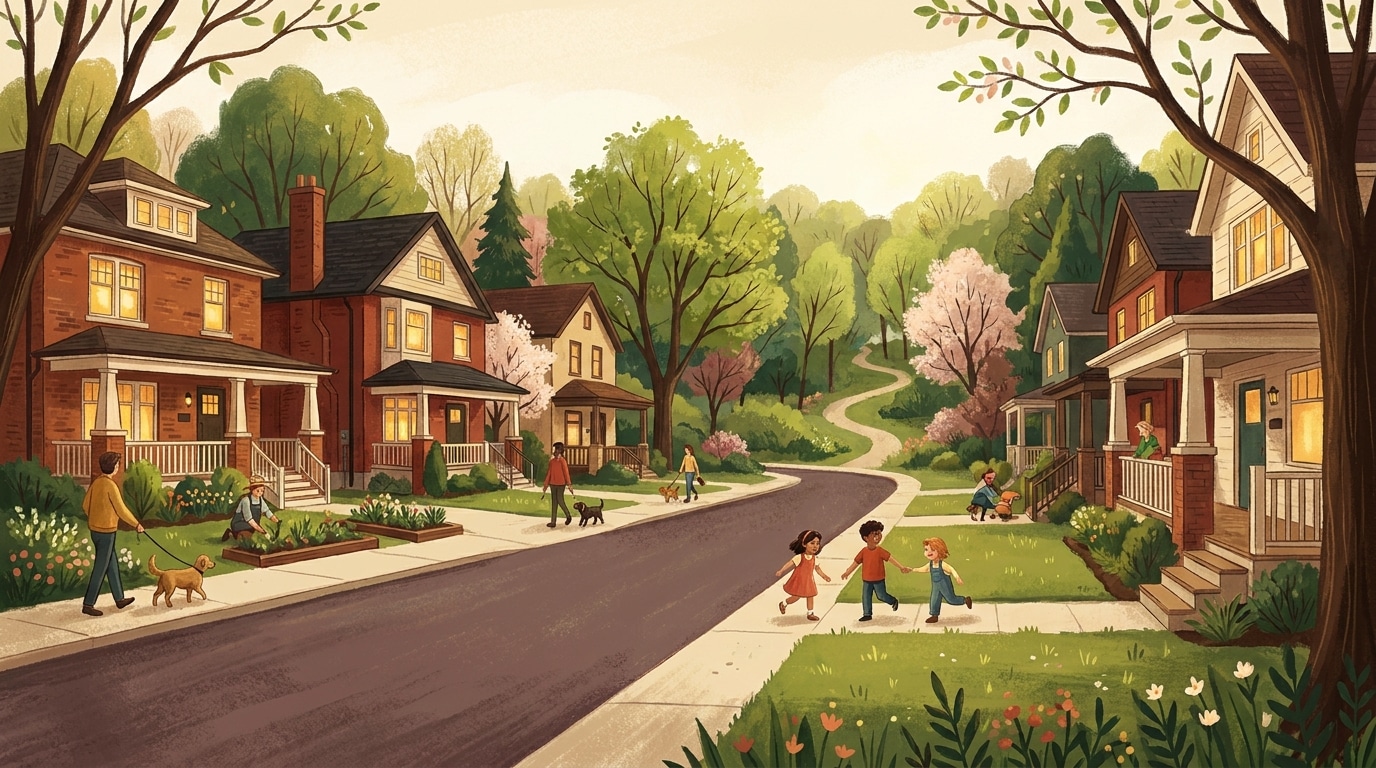
The Toronto housing supply in 2026 looks very different depending on where you stand. Condo owners face one story. Family-home upsizers face another entirely. If you are planning a move into a detached or semi in the 1M to 3M range, the headlines about oversupply may mislead you. So let us separate the noise from the signal.
This piece on the Toronto housing supply in 2026 is market intelligence, not a prediction. We will not promise where prices go. Instead, we will show you how supply actually behaves in the freehold family-home segment. Then you can time your upsize with clearer eyes.
Why the Condo Glut Does Not Mean Cheap Family Homes
Most coverage on the Toronto housing supply in 2026 focuses on condos, and for good reason. Developers built a huge pipeline of small units over the past decade. Many of those units now sit on the market longer than sellers hoped.
However, that inventory rarely fits an upsizing family. A two-bedroom condo does not solve the problem of three kids and a home office. So the condo glut and the family-home market operate almost separately.
Freehold detached and semi supply behaves differently for a simple reason. Nobody mass-produces them. New family-sized homes trickle into established neighbourhoods slowly. Meanwhile, existing owners hold their houses for years before selling.
Statistics Canada tracks housing starts and stock composition across the country, and the data consistently shows apartments dominating new construction while ground-related homes lag. You can explore the national picture through Statistics Canada housing data. That imbalance sits at the heart of the 2026 supply story for families.
What Gentle-Density Policy Actually Changes
Ontario and the City of Toronto have opened the door to gentle density in the Toronto housing supply in 2026. As-of-right rules now allow multiplexes and garden suites on many residential lots. In theory, this adds housing without towers.
In practice, the family-home effect stays modest for the Toronto housing supply in 2026 Here is why. Most gentle-density projects create rental units or smaller ownership homes, not sprawling family houses.
Furthermore, conversions take time. Permits, financing, and construction stretch across years. So the freehold family-home supply picture shifts gradually, not overnight.
You can review the city’s own housing policy direction through the City of Toronto. Read it as context, though, not as a signal that detached inventory will suddenly flood in. It will not.
The takeaway for upsizers
Gentle density matters for the Toronto housing supply in 2026. Yet it does little to loosen the tight supply of the exact homes upsizing families want. That tension defines the 2026 landscape.
How Toronto Housing Supply in 2026 Shapes the 1M to 3M Segment
The 1M to 3M band is where most GTA families upsize. It captures larger semis, detached homes, and character properties in established east-end and central pockets. And here, the Toronto housing supply in 2026 stays structurally tight.
Consider the reasons. Owners of these homes often bought years ago at lower prices. Many carry small mortgages. So they feel no pressure to sell quickly, even when rates or the economy wobble.
As a result, listing volume in prime family neighbourhoods rises and falls with life events, not market timing. People sell when they retire, relocate, or downsize. That rhythm keeps supply thin and steady rather than volatile.
For live inventory context in the Toronto housing supply in 2026, the Toronto Regional Real Estate Board publishes monthly figures through its market data reports. Watch active listings and months of inventory in the freehold categories specifically. Aggregate numbers blend condos and houses, which hides what families actually face.
Neighbourhoods Where Supply Stays Especially Tight
Some family pockets almost never see a wave of listings. Their appeal, school catchments, and lot sizes keep turnover low. Buyers in these areas plan patiently.
In the east end, Leaside draws upsizing families with its detached stock and quiet streets. Listings there move quickly when they appear. Similarly, Playter Estates offers grand character homes, yet very few trade hands each year.
On the west side, Swansea and High Park attract families who want green space and larger lots. Both areas show classic tight-supply behaviour. Homes sell, but rarely in volume.
Since inventory stays thin in the Toronto housing supply in 2026, timing matters less than readiness. The prepared buyer wins the right home. We help families get ready before the listing appears.
A Worked Example: Timing an Upsize in 2026
Numbers make this concrete. Imagine the Smith family, currently in a Danforth-area semi. They want to move up to a detached home near a top school. Their budget sits at 1.8M.
They watch the public MLS for six months. In that window, only nine suitable detached homes list within their target radius. Four sell within a week. The rest need work they cannot take on.
Here is how their options compare.
| Path | Homes seen | Competition | Prep required |
|---|---|---|---|
| Public MLS only | 9 in 6 months | High on the best listings | Financing ready |
| MLS plus off-market network | 15 to 18 in 6 months | Often lower, quieter | Financing plus early positioning |
The second path does not guarantee a better price. Nothing does. However, it widens the pool of homes the Smiths ever get to consider. In a thin-supply year, that extra visibility carries real weight.
Off-market and private sales remain a small slice of total GTA transactions, roughly 5 percent by most estimates. Yet in the family-home segment, even a few extra options can change the outcome. Our off-market report exists for exactly this reason.
Why Public MLS Numbers Miss Part of the Picture
Public inventory counts tell you what is listed today. They do not tell you what is coming, or what sells quietly. And in tight family neighbourhoods, quiet sales matter.
Some owners test the market privately before a public listing. Others sell within a broker network to avoid disruption. These homes never inflate the visible supply figures of the Toronto housing supply in 2026, yet they trade.
Our team tracks these opportunities alongside the public feed. If you want to see inventory beyond the MLS, review our off-market listings in Toronto. It reveals homes that standard searches simply skip.
How this fits TRESA
Ontario now operates under TRESA, the Trust in Real Estate Services Act. It sets clear rules for how we handle listings, offers, and disclosure. We work within that framework on every private or off-market transaction.
So when we share off-market opportunities, we do it transparently and within the law. That protects both buyers and sellers. You can learn more about oversight through the Real Estate Council of Ontario.
A Step-by-Step Plan for 2026 Upsizers
Tight supply rewards preparation. So build your plan before you shop the Toronto housing supply in 2026. Here is the sequence we recommend to upsizing families.
- Confirm your financing early, including a firm pre-approval and a rate hold.
- Define your must-haves versus nice-to-haves across two or three neighbourhoods, not one.
- Decide your buy-first or sell-first approach before you tour homes.
- Connect with an agent who sees off-market inventory in your target areas.
- Get ready to act quickly and calmly when the right home appears.
Notice that timing the whole market never appears on that list. You cannot control supply cycles. You can control your readiness, and that is where families win.
If you want help mapping this plan, learn about our team and how we support GTA families through the upsize. We focus on the east end and central Toronto, where we know the block-by-block supply patterns well.
Frequently Asked Questions
Will 2026 bring more detached homes to the market?
Probably not a wave. Gentle-density policy adds mostly smaller units and rentals. Detached and semi supply still depends on individual owners choosing to sell.
Does the condo oversupply help family-home buyers?
Only indirectly. The two segments barely overlap. A soft condo market does not mean cheaper detached houses in prime neighbourhoods.
Should I wait for supply to loosen before I upsize?
We never promise price direction, so we cannot advise waiting on that basis. What we can say is that readiness matters more than timing in thin-supply segments. Prepared buyers see and secure the best homes.
How do I see homes that never hit the public MLS?
Request our off-market report. It surfaces private and pre-market opportunities across our target neighbourhoods.
Your Next Step
Toronto housing supply in 2026 will keep family homes tight, especially in the 1M to 3M range. So the smartest move is preparation, not prediction. Line up your financing, choose your neighbourhoods, and widen your view of available inventory.
When you are ready, request our off-market report to see homes the public numbers miss. It is the clearest way to understand real supply in your target streets. Neighbourhoods like Moore Park reward buyers who look beyond the obvious.
Not intended to solicit those currently under contract.