


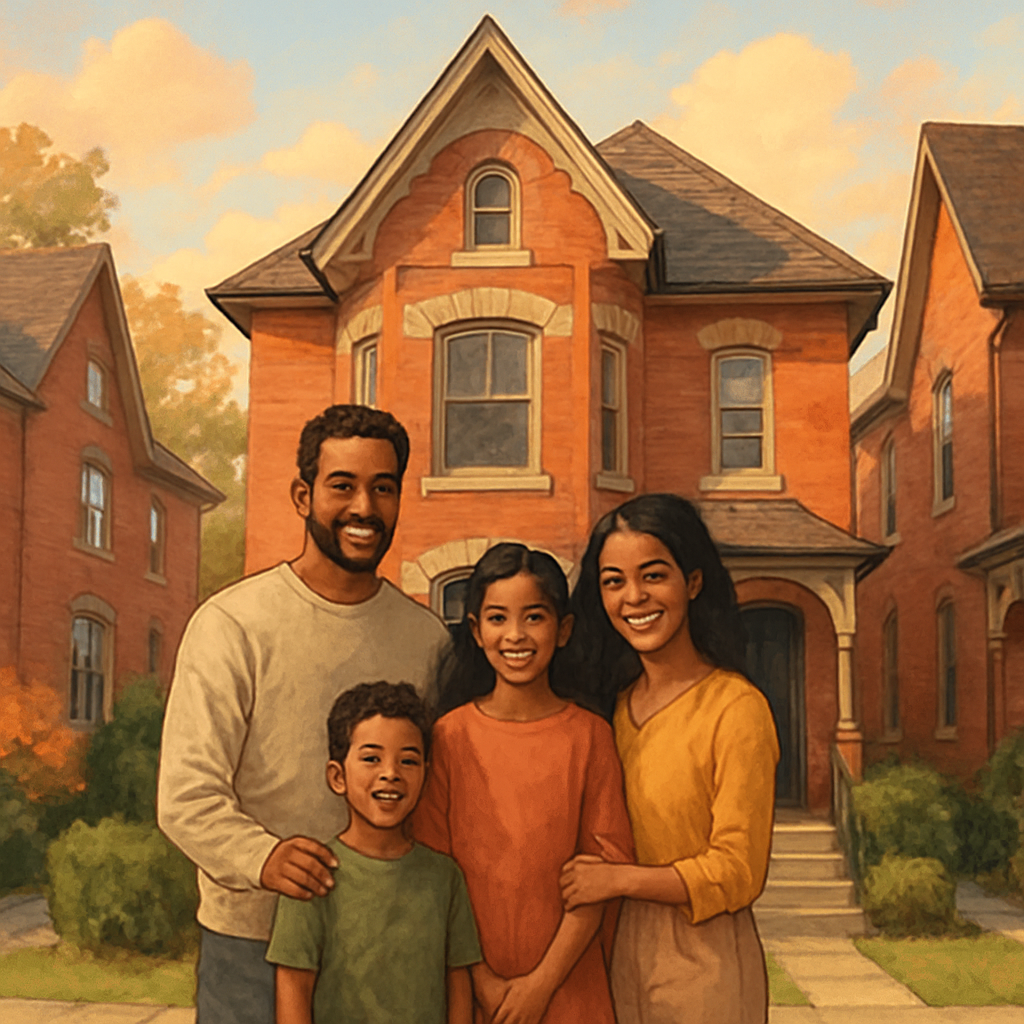
Toronto is a city full of contrast – historic laneways sit beside glass towers, century homes live steps from modern townhomes, and traditional neighbourhoods exist in harmony with rapid urban development. In this mix of old and new, something interesting is happening: more and more growing families are falling in love with older Toronto homes.
While new construction offers conveniences and a glossy modern feel, older homes provide something far deeper: character, craftsmanship, rooted community, and the kind of lasting value that doesn’t fade with trends. For families growing in size, lifestyle, or ambition, these homes offer a sense of grounding at a time when life can feel busy and ever-changing.
What is it about older homes that resonates so powerfully with today’s families? The reasons go far beyond aesthetics – and tap into needs that modern builds sometimes struggle to meet.
A Sense of Soul You Can’t Create Overnight
Many buyers describe a feeling the moment they walk into an older Toronto home – something that feels established, familiar, and comforting even if they’ve never been in the home before. The warmth of original hardwood floors, the detail in mouldings, the charm of fireplaces and built-ins, the way light pours through leaded glass windows – these details create a living experience new builds rarely match.
For growing families navigating a big life transition, that sense of soul matters. Homebuyers aren’t just choosing a structure; they’re choosing the backdrop for their future memories. Older homes carry a story, and for many families, it feels natural to become part of it.
More Space to Live, Grow, and Breathe
One of the most practical reasons families gravitate towards older Toronto homes is simply space. Older homes often sit on wider lots, offer deeper backyards, and provide room layouts that accommodate real family life. Principal rooms are large enough for gatherings, basements often span the entire footprint of the home, and upper floors include bedrooms big enough for siblings or evolving needs.
This extra footage becomes especially valuable as families grow. Children need play space, teens want privacy, and parents often need dedicated zones for work, quiet, or hobbies. Many older homes were designed at a time when families were larger on average, making them inherently family-friendly.
Even when floor plans are more compartmentalized, the separation often becomes a benefit – letting families enjoy different activities without noise spilling across the entire home.
Why Families Are Choosing Older Toronto Homes
- Character and charm that creates an immediate emotional connection
- Larger lots and broader footprints compared to newer builds
- Flexible room layouts that adapt as kids grow and needs change
- Established, walkable neighbourhoods with strong community identity
- Opportunity for thoughtful renovation and long-term customization
- Stronger long-term resale value in high-demand heritage pockets
Craftsmanship Built for the Long Haul
One of the defining features of older Toronto homes is their construction quality. Built in eras when materials were sourced with longevity in mind, many of these homes include solid wood trims, thick plaster walls, handcrafted details, and structural elements meant to endure decades – not just pass code.
Though modern homes often incorporate thoughtful design and new-age efficiencies, the feel of solid wood doors, detailed trim work, or original flooring is difficult to replicate. Many families appreciate that these homes have already proven their strength through decades of weather, seasonal shifts, and everyday life.
This craftsmanship also provides reassurance: if a home has lasted this long, it can likely last for many more chapters.
Neighbourhoods With Identity, Connection, and Belonging
Perhaps one of the biggest reasons families choose older Toronto homes lies beyond the home itself. These homes tend to be located in established neighbourhoods – places where trees are mature, sidewalks are walkable, schools are woven into the community, and residents often know one another by name.
These neighbourhoods were designed in an era of local living. They emphasize community squares, corner shops, and parks within strolling distance. Families find comfort in this sense of connection – especially while raising children. Neighbourhoods like Cabbagetown and Wychwood reflect this perfectly: historic architecture, mature tree-lined streets, and communities where neighbours greet each other by name. There’s something deeply grounding about walking past century-old homes, chatting with long-time residents, and watching children play on streets bordered by maples and oaks.
Newer developments can offer amenities, but they often take years to develop this sense of character and cohesion. Older neighbourhoods already have it, and that stability is something growing families crave.
Renovation Potential: A Chance to Shape Your Long-Term Future
One reason families seek out older Toronto homes is the opportunity to personalize them. While some properties come beautifully updated, many offer room for transformation – often in phases that suit a family’s budget and timeline.
Families may choose to start with cosmetic updates, then gradually move toward larger renovations as needs evolve. A young family might prioritize a nursery or safety updates; a growing household might open up a kitchen; parents of teens might finish the basement for extra hangout space.
Older homes allow families to shape their environment intentionally, room by room, year after year. Rather than buying a brand-new property that feels fully “done,” these homes invite creativity and long-term vision.
Balancing Charm With Modern Convenience
There’s a misconception that choosing an older home means sacrificing modern conveniences, but that’s no longer the case. With thoughtful upgrades, families can enjoy the best of both worlds: the character of a heritage home with the comfort of 21st-century living.
Modern upgrades like new electrical systems, plumbing, HVAC, insulation, windows, and smart-home technology can seamlessly integrate with the home’s historic bones. Kitchens can be reimagined, bathrooms modernized, and basements transformed. The end result is a home that marries the charm of the past with the functionality of today.
Families often describe this hybrid living experience as the ideal balance – authentic, warm, and perfectly suited to a modern lifestyle.
Long-Term Property Value and Market Stability
Older homes in Toronto don’t just appeal to today’s families – they hold long-term value because of their irreplaceability. The land beneath them is in established neighbourhoods that rarely lose demand. The architectural character is unique, and these homes often appreciate faster than newer builds in developing areas.
Scarcity is a powerful driver. There are only so many century homes, Victorian semis, or early-20th-century brick dwellings available. As Toronto grows and intensifies, these properties become even more desirable, especially for families watching the market closely and browsing current Toronto home listings to see what’s available.
Families who choose older Toronto homes are not only selecting a lifestyle – they’re making a sound investment.
Stability, Nostalgia, and Emotional Security
For many parents, older homes feel like the kind they grew up in – or the kind they wished they could have. The sense of nostalgia and comfort in these spaces becomes extremely powerful when raising children. Quirky hallways, cozy nooks, sloped ceilings, and architectural details become part of the family story.
Kids thrive in these environments too. They often find charm in the little quirks of an older home – window seats, hidden storage spots, old fireplaces, or spacious backyards perfect for imaginative play. The home becomes a character in their childhood, not just a backdrop.
This emotional grounding gives families a sense of security. In a fast-paced city, an older home can feel like an oasis of stability.
Final Thoughts
The growing interest in older Toronto homes isn’t just about architecture – it’s about connection, lifestyle, and long-term vision. Families want spaces that offer character, room to grow, neighbourhood stability, and the ability to shape their environment over time. Older homes deliver all of that and more. They are places that evolve with you. Homes that hold stories. Properties that reflect real life, not just modern trends. And for families entering a new chapter – expanding, dreaming, settling – those qualities matter deeply. If you’re considering whether an older home is the right fit for your next move, you can always connect with our team for guidance.


