Selling a home can be a complex process, and pricing it correctly is crucial for success. At The Halyard Group, we understand the importance of accurate market analysis in determining the right listing price for your property.
A Comparative Market Analysis (CMA) is a powerful tool that helps sellers make informed decisions about their home’s value. This blog post will guide you through the essentials of CMAs and how to leverage them effectively in your home-selling journey.
What Is a Comparative Market Analysis?
Definition and Purpose
A Comparative Market Analysis (CMA) serves as a critical tool in real estate for determining a property’s fair market value. This in-depth evaluation examines recently sold properties in a specific area that share similarities with the home you plan to sell. The primary purpose of a CMA is to establish an accurate listing price for your home, preventing overpricing (which can lead to extended market time) or underpricing (which could result in financial loss).
Key Components of a CMA Report
A comprehensive CMA report includes several essential elements:
- Recently sold properties in your neighbourhood (similar in size, age, and features)
- Current listings and pending sales
- Specifics of each comparable property (square footage, number of bedrooms and bathrooms, lot size, notable features or upgrades)
- Original listing price, final sale price, and days on market for each property
These components provide a complete picture of the market, allowing for a data-driven approach to pricing your home competitively.
CMA vs. Appraisal
While both CMAs and appraisals aim to determine a property’s value, they serve different purposes and follow distinct processes:
- CMA: Performed by real estate agents to help sellers price homes or assist buyers in making competitive offers. CMAs rely heavily on market data and recent sales trends.
- Appraisal: A more formal evaluation conducted by a licensed appraiser (often required by lenders for mortgage approval). Appraisals consider factors like property condition, code violations, and structural issues, and typically include a physical inspection.
In the Greater Toronto Area, where market conditions can change rapidly, a CMA often provides a more current snapshot than an appraisal. However, manual inspections are usually time-consuming and prone to human errors, and comparative market analysis does not always identify all the relevant factors.
The Value of Professional Expertise
While online tools can provide rough estimates, they often lack the nuanced understanding of local market conditions that experienced real estate professionals possess. A skilled agent (such as those at The Halyard Group) can interpret CMA data in the context of current market trends, seasonal fluctuations, and neighbourhood-specific factors that automated systems might overlook.
As we move forward, let’s explore the specific factors considered in a CMA and how they contribute to an accurate valuation of your property.
What Factors Shape a Comparative Market Analysis?
Recent Sales Data
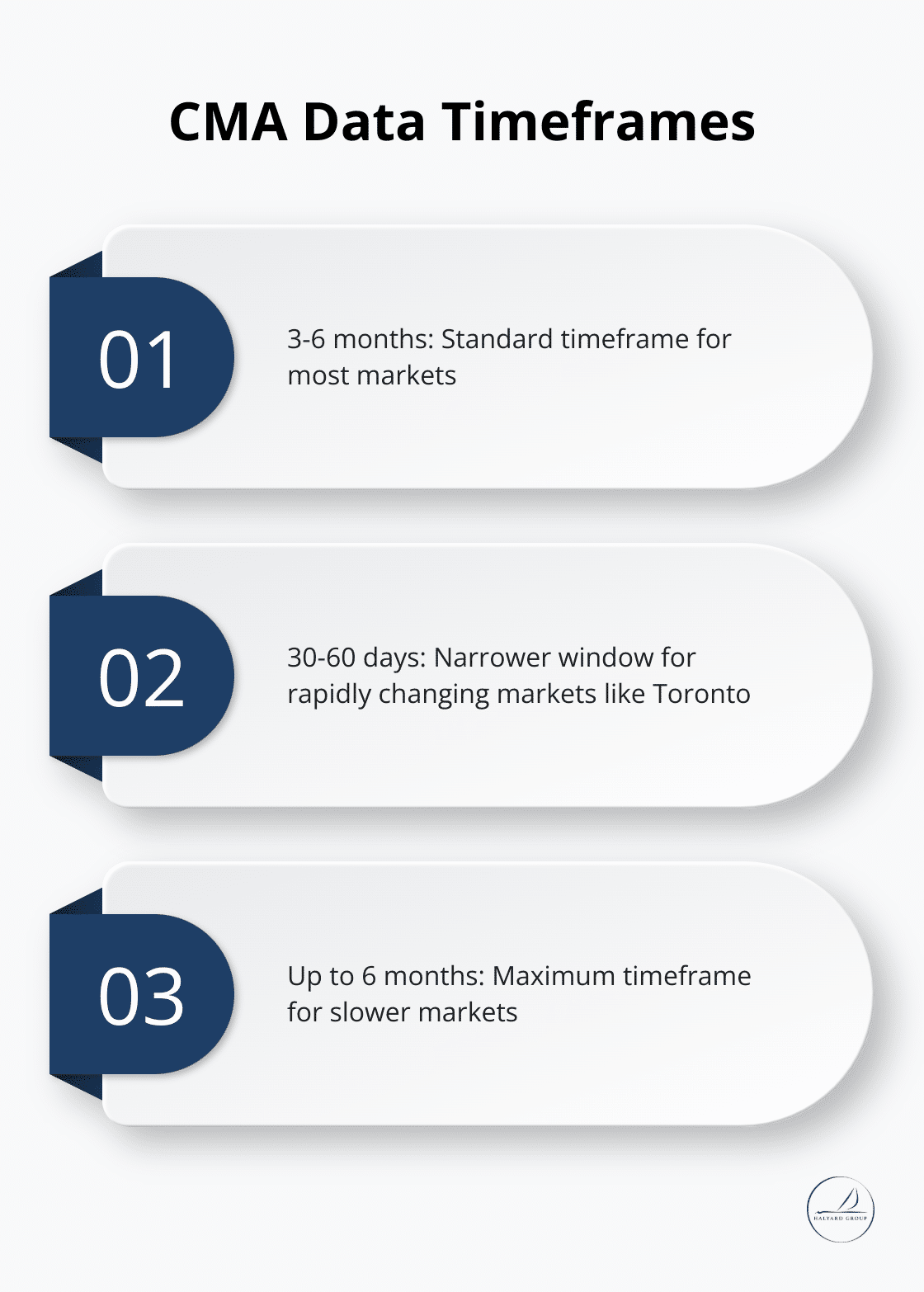
The foundation of any Comparative Market Analysis (CMA) is recent sales data from comparable properties. Real estate professionals typically focus on homes sold within the last three to six months, and within specific neighbourhoods that reflect the property’s characteristics, as older data may not reflect current market conditions. In rapidly changing markets like Toronto, this window might narrow to the past 30-60 days for the most up-to-date insights.
When valuing a three-bedroom semi-detached house in Leslieville, for example, analysts look at similar properties that have recently sold in the area. They pay close attention to the final sale prices (not just the listing prices), as this gives a true picture of what buyers are willing to pay.
Market Trends and Conditions
Current market trends significantly impact property values. Analysts examine factors such as average days on market, the ratio of list price to sale price, and inventory levels. For example, in a seller’s market with low inventory, homes might sell above asking price within days of listing. This trend would influence CMA recommendations.
Broader economic factors also play a role. Interest rates, for instance, can greatly affect buyer behaviour. When rates rise, as we’ve seen recently, it can cool the market and potentially lower property values.
Property Features and Upgrades
Every property is unique, and CMAs account for this. They evaluate features like:
- Square footage
- Number of bedrooms and bathrooms
- Recent renovations or upgrades
- Energy-efficient systems
- Outdoor spaces (gardens, decks, pools)
A newly renovated kitchen or a finished basement can add significant value to a home. CMAs factor these improvements into the analysis, adjusting comparables accordingly.
Location and Neighbourhood Characteristics
Location remains a key factor in real estate valuation. CMAs consider:
- Proximity to amenities (schools, parks, public transit, shopping)
- Neighbourhood safety and crime rates
- Future development plans in the area
- Local zoning laws and regulations
A home near a top-rated school or a future transit hub might command a premium. Conversely, properties near industrial areas or with restrictive zoning might see lower valuations.
The thorough examination of these factors ensures that CMAs provide a comprehensive and accurate picture of a property’s value. This detailed analysis allows clients to make informed decisions, whether they’re selling their current home or looking to upsize to a larger property in the Greater Toronto Area. As we move forward, we’ll explore how to interpret and apply this wealth of information to effectively price your home.
Maximizing Your Home’s Value with CMA Data
Interpreting CMA Results
The interpretation of Comparative Market Analysis (CMA) results requires a deep understanding of the local real estate landscape. This guide covers the essential steps for conducting a CMA, from collecting data on comparable homes to analysing that information for informed decisions. If comparable properties in your neighbourhood have sold for an average of $800,000, this doesn’t automatically mean your home should be priced at this exact point. Your home’s unique features, current market conditions, and seasonal trends all influence the optimal listing price.
Adjusting for Unique Features
Every property has its own set of characteristics that can impact its value. A recently renovated kitchen or a finished basement can significantly boost your home’s worth. Renovations take time, patience and planning, but can be appreciated for many years. When analyzing your CMA data, it’s essential to adjust for these unique features.
For example, if your home has a newly installed smart home system or energy-efficient appliances, these modern amenities could justify a higher price point compared to similar homes without these upgrades. A thorough evaluation of these factors ensures your property’s distinctive qualities are reflected in its pricing strategy.
Strategic Pricing in Different Market Conditions
The real estate market is dynamic, and pricing strategies should adapt accordingly. In a seller’s market (where demand outpaces supply), you might consider pricing your home slightly below comparable sales to generate multiple offers and potentially drive the price up. Conversely, in a buyer’s market, pricing at or slightly above market value gives you room for negotiation while still attracting serious buyers.
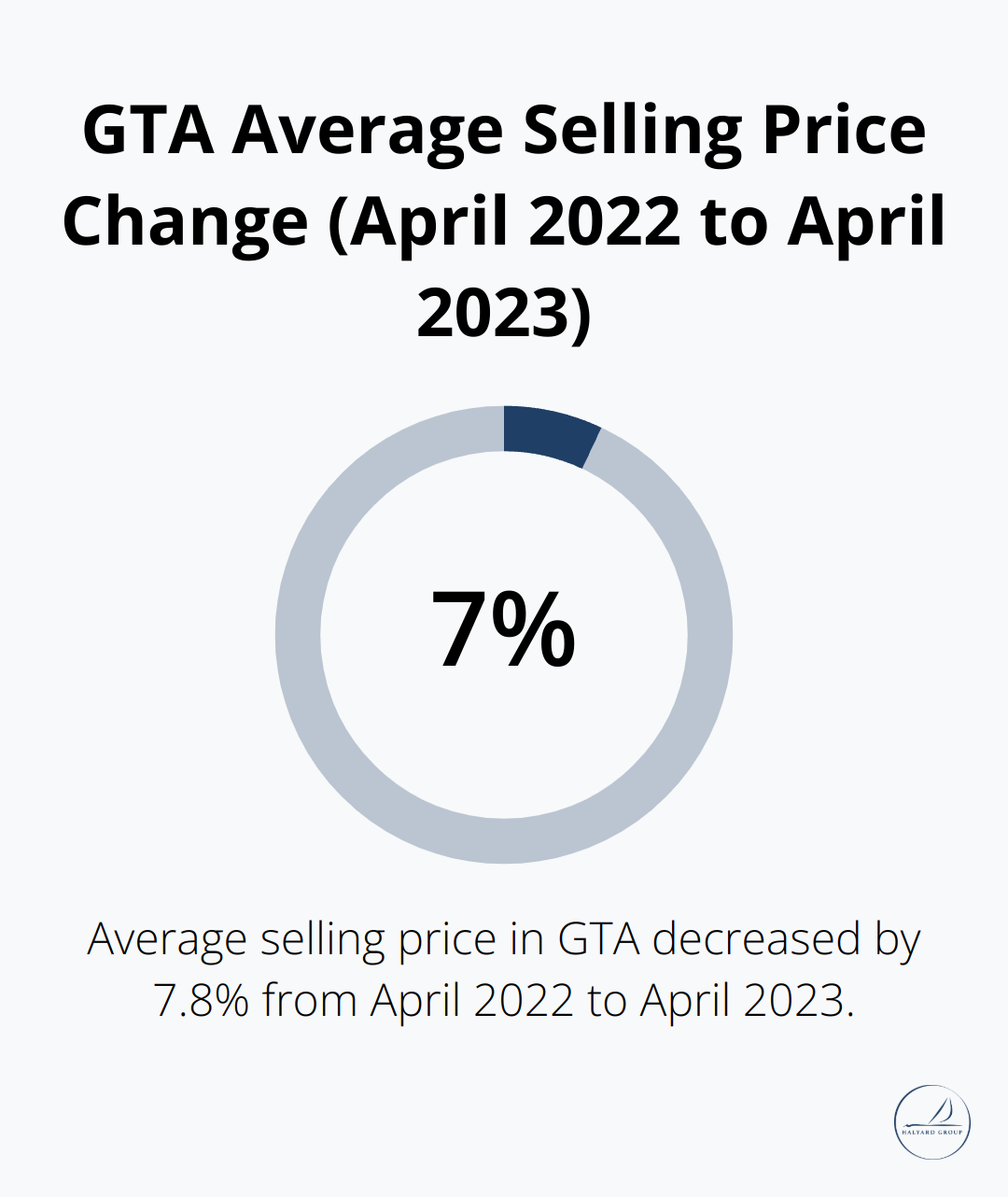
The average selling price in the GTA was $1,153,269 in April 2023 – down 7.8 per cent compared to $1,250,704 in April 2022. This kind of market data, combined with your CMA results, helps inform a pricing strategy that aligns with current trends.
Fine-Tuning Your Listing Price
After you analyze the CMA data and consider your home’s unique features and market conditions, it’s time to fine-tune your listing price. A common strategy involves pricing your home at a point that aligns with buyer search parameters. For instance, if your CMA suggests a value of $505,000, pricing at $499,900 could capture the attention of buyers searching in the under-$500,000 range.
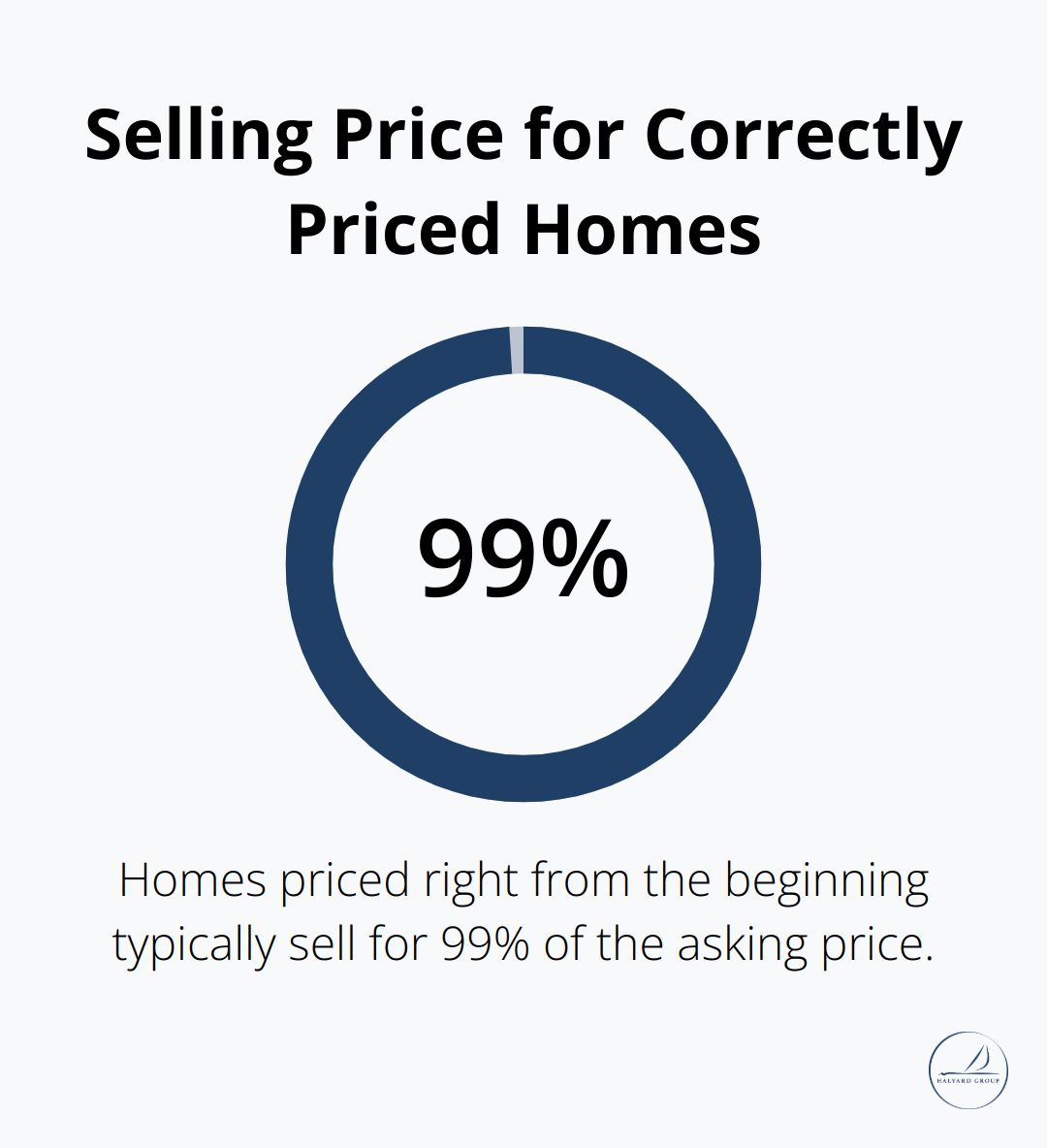
However, it’s important to avoid overpricing. Homes that remain on the market for extended periods often end up selling for less than they would have if priced correctly from the start. The Canadian Real Estate Association reports that homes priced right from the beginning typically sell for 99% of the asking price.
Final Thoughts
Comparative Market Analysis stands as an essential tool for home sellers in today’s real estate landscape. This data-driven approach to pricing empowers sellers to make informed decisions that impact their selling experience. A well-executed market analysis helps set a competitive listing price and offers valuable insights into local market trends and buyer preferences.
To make the most of your CMA insights, implement strategic upgrades that align with current market demands. Focus on improvements that offer the highest return on investment (such as kitchen updates or energy-efficient installations). Keep your property well-maintained and staged to showcase its best features. Price your home correctly from the start to avoid the pitfalls of overpriced listings that often linger on the market.
To ensure that your property receives optimal pricing, contact The Halyard Group to maximize your home value and attract serious buyers along the way.