Buying as newlyweds is one of the first major financial decisions a couple makes together. It is also one of the most personal. Beyond budget and square footage, it reflects shared values, future plans, and the lifestyle you want to build over time. For many couples who later become upsizing families, the first purchase sets the tone for everything that follows.
In Toronto, where neighbourhood dynamics vary significantly and market conditions continue to evolve, buying as newlyweds requires both imagination and strategy. The goal is not simply to find a home that works today, but to choose a location and property type that support long term flexibility.
Start With the Life You Are Building
Before focusing on listings or specific streets, couples buying as newlyweds benefit from clarifying their shared five to ten year vision. This is especially relevant for those who anticipate becoming an upsizing family in the near future.
The top reasons Canadians move include changes in household size, employment, and the desire for larger or more suitable housing. These life transitions often happen quickly in the early years of marriage. Changes in family structure remain one of the primary drivers of residential mobility.
Buying as newlyweds should account for these likely shifts. Even if children are not immediate, the conversation around space, commute, school zones, and work from home needs should happen early. A home that feels ideal for two adults may feel restrictive once family life expands.
Location Versus Space: The Core Decision
One of the central tensions when buying as newlyweds is whether to prioritize location or square footage. In Toronto, this trade off is particularly pronounced.
For couples drawn to cultural vibrancy and walkability, neighbourhoods such as Kensington Market offers proximity to restaurants, transit, and community life. Buying as newlyweds in these areas often means opting for a smaller semi detached home or condominium. The advantage is lifestyle and accessibility. The compromise may be storage, outdoor space, or additional bedrooms.
Alternatively, neighbourhoods such as Birch Cliff or Clairlea-Birchmount may provide more space at a similar price point. Buying as newlyweds in these areas can allow for a home office, finished basement, or backyard that supports future family needs. The trade off may be a longer commute or quieter streets.
The key when buying as newlyweds is to view location not only through the lens of today’s lifestyle but also through the lens of long term suitability.

Thinking Ahead to Upsizing
For many couples, buying as newlyweds is not the final move. It is the first chapter in a longer housing journey. Thinking intentionally about where you may eventually want to upsize helps guide smarter present day decisions. When you understand that your needs are likely to evolve, whether through children, career growth, or lifestyle changes, your first purchase becomes part of a broader plan rather than a standalone milestone.
This forward thinking approach reflects how many Toronto families navigate the market. Move up buyers continue to represent a significant portion of housing activity, particularly in established urban centres.
Buying as newlyweds with clarity around your longer term goals allows you to assess whether your first property can realistically serve as a stepping stone. It encourages you to evaluate appreciation potential, resale appeal, and adaptability, ensuring that today’s decision supports tomorrow’s possibilities.
Evaluating Financial Capacity With Long Term Clarity
Affordability remains a central consideration when buying as newlyweds. Ontario’s home ownership rate has experienced gradual changes over the past decade, particularly among younger age groups, reflecting the challenges many households face when entering the market.
For dual income couples, especially those anticipating children, it is important to consider not only current income but also potential shifts such as parental leave or career transitions. Buying as newlyweds at the top of your comfort zone can limit flexibility later.
Beyond mortgage payments, consider property taxes, maintenance costs, utilities, and renovation potential. A property that requires immediate updates may strain finances that would otherwise be allocated toward future upsizing.
Reviewing current inventory across the city helps ground expectations around pricing and property types. It provides context for what is realistically available at different budget levels and highlights the gap between entry level homes and larger family properties.
Understanding this pricing spread early is equally important from a planning perspective. Buying as newlyweds becomes more strategic when you recognize how your first purchase may build equity over time and contribute toward a future move. Clarity around both market conditions and long term financial positioning ensures that your decision to move as a couple today, supports your goals for the future too.
Choosing a Property With Adaptability
When buying as newlyweds, adaptability should be a priority. The ideal first home is not necessarily the largest or the most visually appealing. It is the one that can evolve with your needs.
Consider layout and functionality. Can a den convert into a nursery? Is there potential to finish a basement? Does the zoning allow for future additions? These structural considerations matter more than cosmetic finishes.
It is helpful to think through one structured framework when evaluating properties:
- Does the layout support both current and future family needs?
- Is the neighbourhood aligned with long term schooling and community goals?
- Can the property appreciate in line with broader market trends?
- Would the home be attractive to future buyers if you decide to sell?
- Does the financial commitment leave room for savings and life changes?
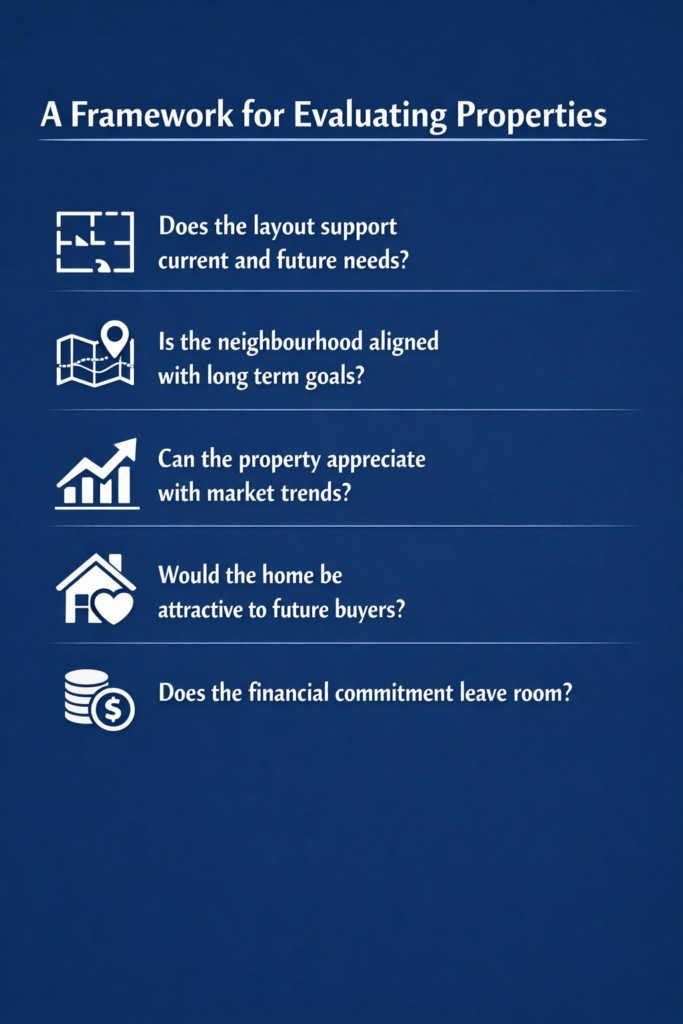
Using this framework when buying as newlyweds encourages disciplined decision making while still allowing space for emotion.
Community, Schools, and Daily Rhythm
For upsizing families, schools and amenities often become primary drivers of housing decisions. While buying as newlyweds may not yet have school aged children, awareness of catchment areas and community infrastructure can prevent a second move sooner than expected.
Neighbourhoods such as Bedford Park have a long history of community engagement and access to parks. These qualities support long term stability and are often cited by families as key reasons for moving.
Buying as Newlyweds is not only about securing property. It is about choosing an environment that supports your family’s rhythm.
Avoiding Common Mistakes
There are recurring patterns that create stress for couples buying as newlyweds. Overextending financially in order to secure a specific postal code can limit options later. Focusing exclusively on aesthetics rather than functionality can lead to renovation fatigue. Ignoring resale potential can reduce future mobility.
At the same time, being overly cautious can prevent meaningful progress. Toronto’s market has evolved through different cycles, yet long term demand in established neighbourhoods has remained resilient. Balanced decision making is more effective than trying to time the market perfectly.
Aligning Emotion and Strategy
Buying as newlyweds is deeply emotional. It represents independence, partnership, and a shared future. It is natural to feel excitement and pressure simultaneously.
However, the strongest outcomes occur when emotion and strategy align. A home should feel welcoming, but it should also function as a stable asset. It should support daily life while leaving room for growth.
If questions arise about how your personal timeline aligns with market realities, having a grounded conversation can clarify direction. Thoughtful guidance often begins with open dialogue. Approaching buying as newlyweds with both heart and discipline transforms the process from overwhelming to empowering.
Final Thoughts on Buying as Newlyweds
Buying as newlyweds is rarely a standalone event. It is the foundation for future decisions about upsizing, community, and long term security. The neighbourhood you choose, the space you prioritize, and the financial structure you adopt all shape what becomes possible in the years ahead.
In a city as layered as Toronto, the right decision is rarely about finding perfection. It is about selecting a home that reflects who you are today while accommodating who you may become. With clarity around lifestyle, adaptability, and long term goals, buying as newlyweds becomes less about pressure and more about intention.
For couples who envision themselves as future upsizing families, the first purchase is not just a milestone. It is a strategic beginning.