Privacy becomes a different kind of priority once a family outgrows its first home.
In the early years, proximity and convenience tend to lead the search. You want to be close to transit, close to work, close to the energy of the city. Shared walls and narrow lots feel like reasonable trade-offs for location and affordability. As careers stabilize, children get older, and the rhythm of daily life grows more layered, what a home needs to offer begins to shift. Quiet matters more. Separation from neighbours matters more. The ability to move through your own space without feeling observed becomes something you actively search for rather than simply hope to find.
Toronto homes with privacy exist across the city, but finding them requires knowing what to look for. Privacy is not a feature that shows up cleanly in a listing. It is a quality that emerges from a combination of lot placement, home layout, street character, and neighbourhood density. Understanding how those elements work together is the starting point for a more focused and ultimately more successful search.
Why Toronto Homes With Privacy Raises a Priority
Families who are upsizing and looking for Toronto homes with privacy are typically navigating more complex lives than they were a decade earlier. There may be two professionals working from home on demanding schedules. There are teenagers who need their own space and a different kind of autonomy. There are social lives that have shifted from impromptu evenings out to hosting at home, where the backyard and main floor need to function as a genuine extension of the living space rather than an afterthought.
All of these changes place different demands on a property. A home that felt open and sociable in its layout can begin to feel exposed. A backyard visible to three neighbours loses its appeal as a place to decompress or entertain. A busy street that once felt vibrant can start to feel like a constant intrusion into daily life.
Toronto homes with privacy address these pressures in ways that go beyond simply adding a fence or planting a hedge. They are designed and positioned in ways that create genuine separation, and that quality tends to hold its value over time. Families who prioritize privacy when upsizing rarely find themselves wishing they had compromised on it. More often, they describe it as one of the most consequential decisions they made in choosing their next home.
What Physical Features Create Privacy in a Toronto Home
For Toronto homes with privacy – the lot is where it all begins. Homes situated on larger or deeper lots naturally offer more distance from neighbouring properties, which reduces sound transfer, limits sightlines, and creates room for landscaping that functions as a meaningful buffer rather than decoration alone.
Corner lots can work in a family’s favour in some cases, offering separation on two sides of the property. However, they also tend to increase street exposure and foot traffic visibility, which can undercut the sense of enclosure many families are looking for. Interior lots on quieter residential streets often deliver more consistent privacy across all sides of the property and tend to feel more settled as a result.
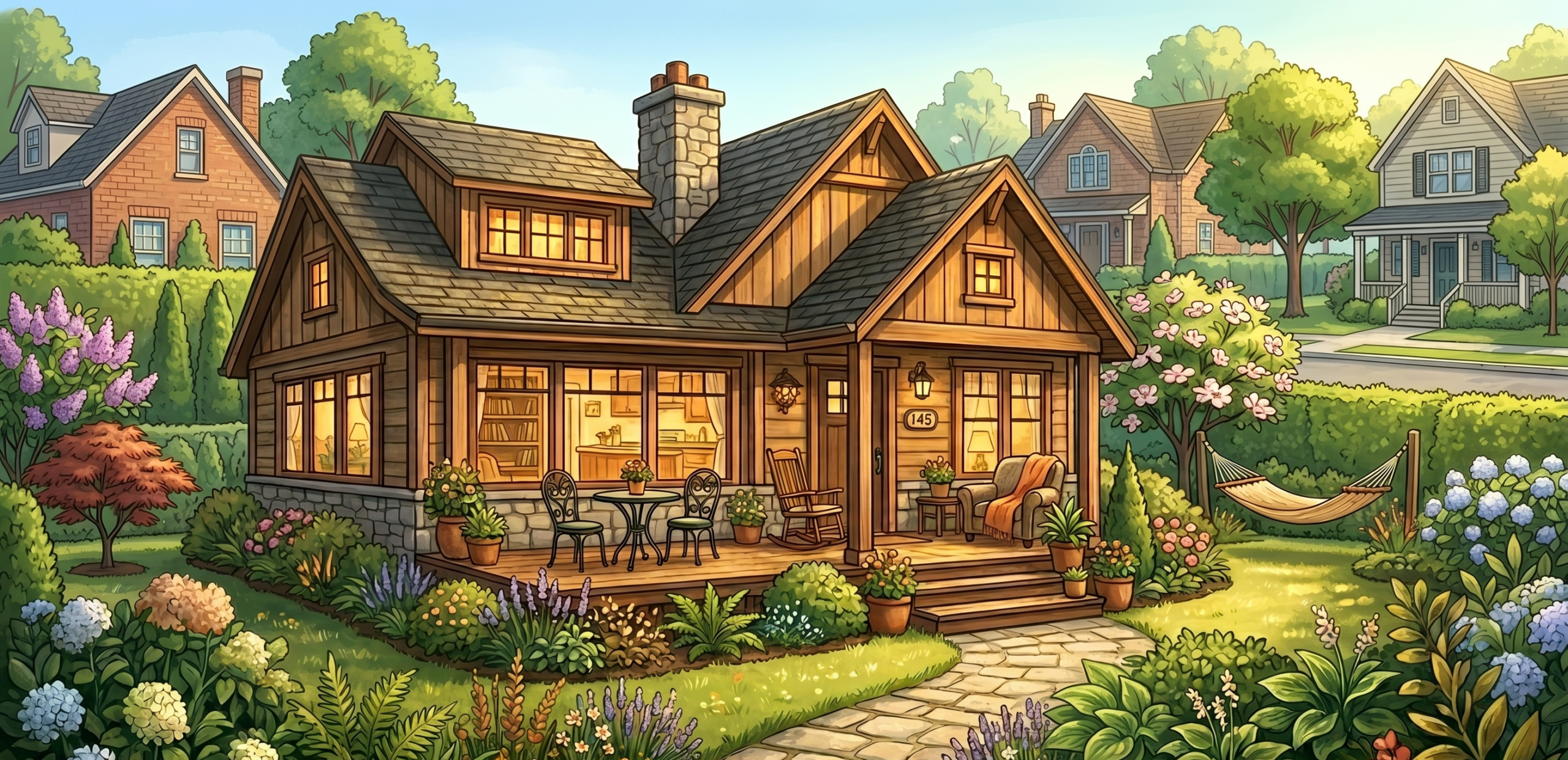
Setbacks matter as well. A home positioned further back from the street creates a different relationship with the public realm, one that feels more removed and considered. Combined with mature trees, established hedging, or a well-designed front garden, a deeper setback can make a significant difference in how a home feels from the inside looking out, particularly in denser parts of the city where properties sit close together.
Within the home itself, layout contributes to privacy in ways that are easy to overlook during a viewing. Where bedrooms are positioned relative to neighbouring windows, how open the main living areas are to adjacent properties, and whether a backyard can be screened effectively without significant cost or years of growth all factor into whether a property genuinely delivers the separation a family is looking for. A thoughtful floor plan can compensate for some lot limitations, but for Toronto homes with privacy – it cannot replace the foundation that a well-positioned property provides.
Exterior cladding, window placement, and the orientation of outdoor living areas also play a role. A home where the primary outdoor space faces south onto a quiet interior yard, with minimal exposure to neighbouring decks or upper-floor windows, offers a fundamentally different experience than one where the backyard opens directly onto a shared laneway or sits at the base of an adjacent home’s elevated deck.
How Neighbourhood Character Shapes the Experience of Privacy
No amount of landscaping fully compensates for a neighbourhood that works against privacy. Street width, lot density, traffic patterns, and the general character of surrounding homes all influence how Toronto homes with privacy feel in daily life.
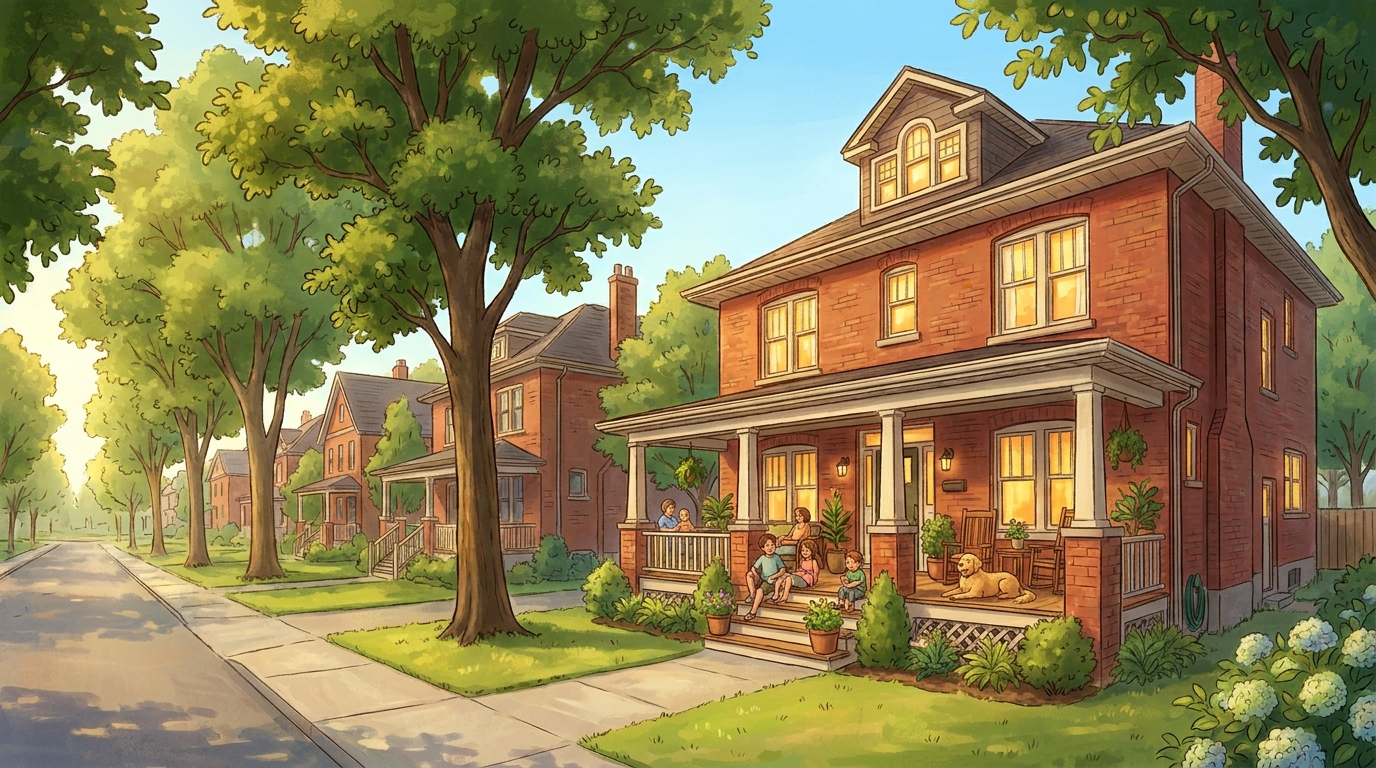
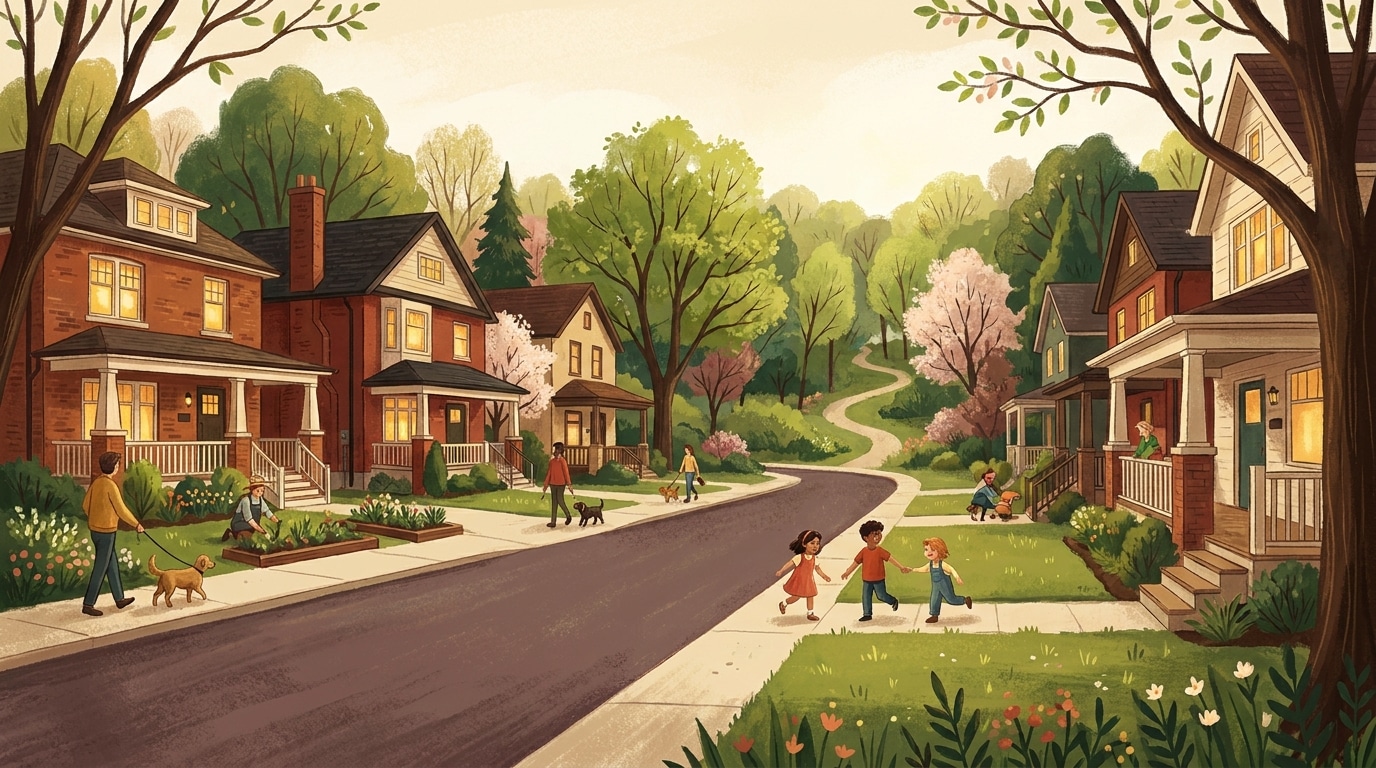
Established residential neighbourhoods with mature tree canopies, generous lot sizes, and lower through-traffic tend to offer the conditions that support genuine privacy. These are areas where the housing stock was built at a scale that assumed outdoor space and separation were part of the value proposition, not features to be negotiated or added later. The difference is felt immediately when you walk the streets, and it is reinforced every time you spend an evening in the backyard or work from home with the windows open.
Rosedale is one of Toronto’s clearest examples of a neighbourhood where Toronto homes with privacy are built into the fabric of the streets. Winding roads, significant lot depth, and a housing stock that sits well back from the street create an environment where homes feel genuinely removed from the city around them. It remains one of the more sought-after destinations for upsizing families with privacy as a leading criterion, and that demand has remained consistent across market cycles.
Bedford Park offers a quieter and somewhat more accessible version of that same quality. Detached homes on well-proportioned lots, lower density, and a neighbourhood character that prioritizes residential calm over commercial activity make it a strong fit for families who want privacy without the price point that Rosedale typically commands. The streets here have a settled, unhurried quality that families with school-aged children tend to respond to strongly.
Further east, Moore Park delivers a similar combination of Toronto homes with privacy, including mature streetscapes, generous setbacks, and a sense of remove that is rare in a city as dense as Toronto. Its proximity to ravine land adds another layer of natural separation that resonates with families who have privacy and outdoor connection both on their list. Homes here often back onto green space or benefit from the topography of the ravine system in ways that create a buffer no fence or hedge could replicate.
What to Evaluate When Visiting a Property
When a listing presents Toronto homes with privacy as part of its appeal, the viewing is where that claim needs to be tested rather than accepted at face value.
Start at the street. How far is the home set back? What is the relationship between this property and the ones directly beside and behind it? Are there mature plantings already in place, or would achieving meaningful privacy require years of landscaping investment and ongoing maintenance?
Move through the main living areas and consider sightlines honestly. Standing in the kitchen or the primary living room, what do you see when you look out the windows? If the answer is primarily the interior walls or windows of a neighbouring home, that relationship is unlikely to improve with time and should be factored into your assessment of the property.
Spend time in the backyard at different points during the viewing. A yard that feels enclosed and private in the early afternoon may feel considerably more exposed once you account for neighbouring decks, upper-floor windows, or fencing that falls short of what the space needs. Understanding what the yard would require to deliver genuine privacy, and whether that investment is realistic within your plans, is part of evaluating a property with the care it deserves.
Finally, walk the street separately from your scheduled viewing. The character of a neighbourhood at 7 in the evening tells you something that a midday visit cannot. Traffic patterns, foot traffic, how close together the homes feel, and whether the street carries the quietness a family is looking for all become clearer when you experience the area outside of a formal showing context. That walk often confirms what a viewing suggested, or raises questions worth exploring before moving forward.
Reviewing homes currently available across different parts of the city can help you calibrate what privacy looks like at various price points before you begin visiting properties in person.
Balancing Privacy With Connection to the City
One concern that sometimes surfaces for families searching for Toronto homes with privacy is whether pursuing that quality means trading away the things they value about city living. Access to good restaurants, cultural amenities, strong transit connections, and the energy of an urban neighbourhood are not things most families want to give up entirely when they upsize.
The reality is that privacy and urban connection are not mutually exclusive in Toronto. Many of the neighbourhoods that offer the strongest combination of lot depth, mature streetscapes, and residential calm are also well-positioned relative to subway lines, arterial roads, and the commercial streets that support daily life. The search becomes less about choosing between privacy and convenience and more about understanding which parts of the city offer both at a price point that aligns with your plans.
It is also worth recognizing that privacy is not a static feature. It can be built over time through considered landscaping, thoughtful renovations, and small changes that compound into a meaningfully different experience of a home. A property that delivers seventy percent of what your family needs today may be capable of the full picture within a few years, and understanding that potential is part of evaluating a home with a long-term lens.
For families working through those questions, connecting with a realtor who specializes in upsizing in Toronto can bring the kind of specific, neighbourhood-level insight that makes the search feel less like a process of elimination and more like a path toward a home your family has been working toward for some time.