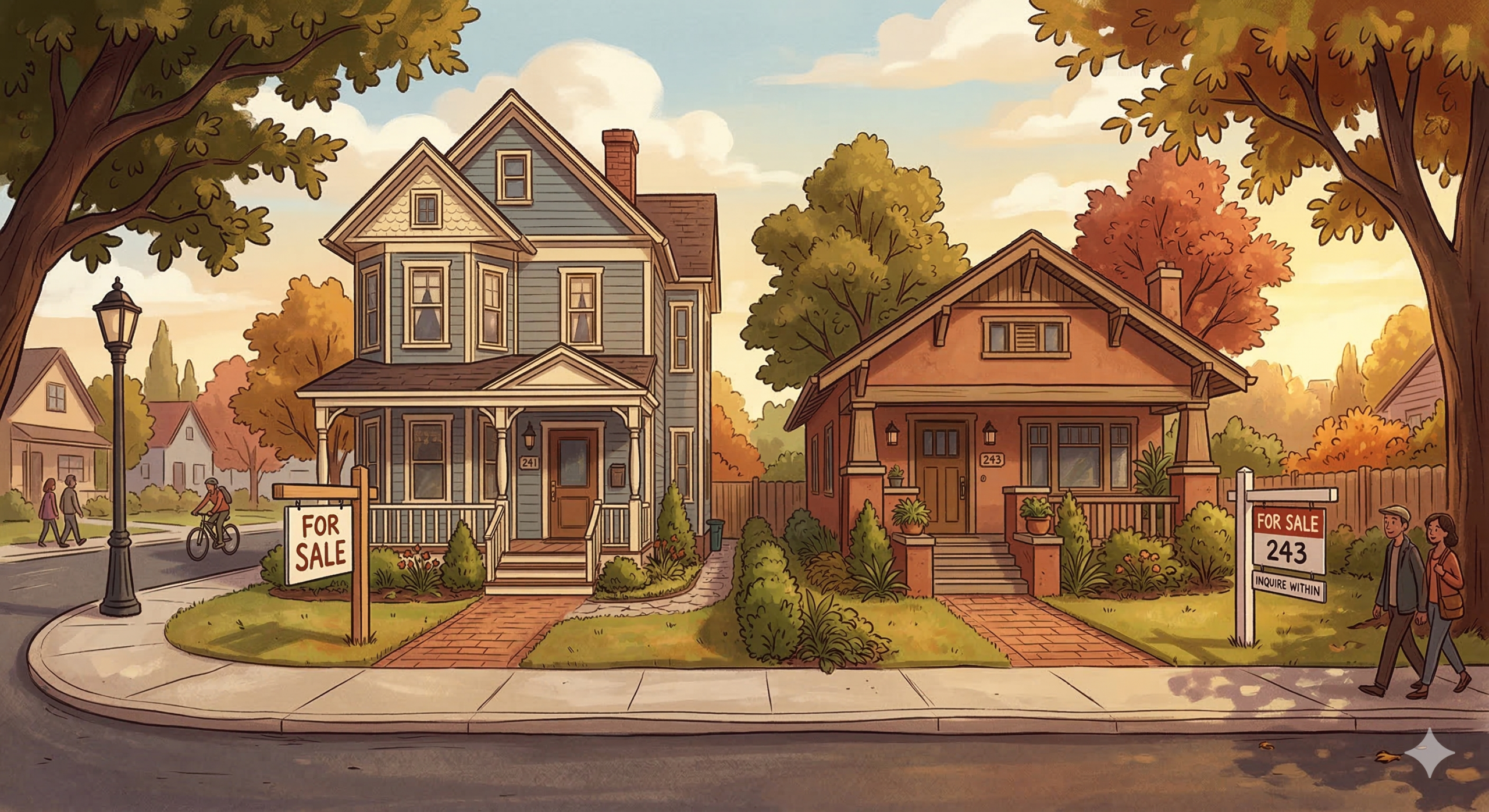
At some point in a relationship, two people who each own a home arrive at the same realization. Living separately no longer makes sense. The logistics are wearing. The emotional pull toward a shared space is strong. And the financial opportunity, if handled thoughtfully, is significant.
For couples in the Greater Toronto Area who each own a property, the decision to consolidate and upsize is one of the most consequential moves they will make together. It is not simply a real estate transaction. It is a merging of financial histories, lifestyle preferences, and long-term plans into a single shared vision.
Done well, it can be one of the most powerful financial moves a couple makes. Done without a clear plan, it can create stress that lingers long after the moving boxes are unpacked. This guide walks through the key considerations for couples preparing to consolidate and upsize in the GTA.
Why Two Properties Become One Strategic Opportunity
Most couples who arrive at this crossroads have spent years building equity independently. Each partner may own a condo, townhouse, or detached home purchased before the relationship deepened. Each property carries its own mortgage, maintenance obligations, carrying costs, and emotional weight.
When the decision is made to consolidate and upsize, those two equity positions combine into something considerably more powerful. The proceeds from two sales, directed toward a single larger purchase, often open the door to neighbourhoods and property types that neither partner could have accessed on their own.
This is one of the clearest financial advantages of choosing to consolidate and upsize rather than selling one property and keeping the other. Instead of maintaining two separate assets, you are concentrating equity into a single, well-chosen home in a strong location. For couples whose individual properties have appreciated meaningfully, the combined position can be substantial.

Aligning Before You List
Before any property goes to market, the most important work happens between partners. Couples who consolidate and upsize successfully tend to share a clear, honest conversation about what each person actually needs from the next home. This is explored thoughtfully in our guide on making housing decisions as a couple, and it is worth reading before any serious planning begins.
The conversations that matter most tend to revolve around a few core questions. Where do you want to live, and how does that interact with work, schools, and community ties? How much space do you genuinely need, as opposed to how much feels aspirational? Which lifestyle priorities are shared, and which belong to one partner more than the other?
Couples who skip this alignment step often find themselves house hunting with mismatched expectations. One partner may be drawn to a particular neighbourhood for its walkability and energy. The other may prioritize square footage, a garage, and proximity to a highway. Neither priority is wrong, but without a clear shared framework, the search can become frustrating and drawn out.
Taking the time to align on non-negotiables versus preferences before you consolidate and upsize makes the entire process more efficient and significantly less stressful.
Understanding the Tax and Financial Implications
Selling two properties simultaneously, or in close succession, introduces financial and tax considerations that are worth understanding before you proceed. For most couples, the principal residence exemption is a central factor.
In Canada, the principal residence exemption allows homeowners to shelter capital gains on the sale of a property designated as their primary residence. When two partners each own a property, only one can be designated as the principal residence per year per family unit. This means the sale of one property may trigger a taxable capital gain, depending on how ownership is structured and how long each property has been held.
This is not a reason to delay the decision to consolidate and upsize. It is a reason to plan carefully. Speaking with a tax advisor before listing either property helps couples understand their full financial picture and sequence the sales in the most advantageous way.
Beyond tax, couples should also consider how joint ownership of the new property will be structured, whether as joint tenants or tenants in common, and what that means for estate planning and future flexibility. These are not complicated decisions, but they are worth making deliberately rather than defaulting to whatever is easiest at the time of closing.
Sequencing the Sales and the Purchase
The logistics of how you consolidate and upsize matter enormously. Selling two properties and buying one larger home involves several moving parts, and the sequence in which they happen affects your financial exposure, negotiating position, and stress levels throughout the process.
The most straightforward approach for most couples is to list and sell both properties before committing to a purchase. This gives you a firm number to work with, eliminates the risk of carrying three properties simultaneously, and puts you in the position of a cash-strong buyer when you make your offer on the next home.
The tradeoff is that you may need to arrange temporary housing between the sale of your current properties and the closing of your new one. For some couples, this is a minor inconvenience. For others, particularly those with children, pets, or significant belongings, it requires more careful planning.
An alternative approach is to have one partner sell first, move into the other partner’s property temporarily, and then list that second property once the new home is under contract. This staged approach reduces overlap and can make the transition feel less compressed, though it does require flexibility and a shared understanding of the temporary arrangement.
Whichever sequence you choose, working with a realtor who understands the specific dynamics of helping couples consolidate and upsize, including the coordination of multiple transactions, makes the process considerably more manageable.
Choosing the Right Neighbourhood Together
When two people have lived independently in different parts of the city, choosing a shared neighbourhood is one of the most meaningful decisions in the process. Each partner may have deep roots in their current community, favourite coffee shops, nearby friends, a familiar commute. Letting go of that familiarity is a real adjustment, and it deserves to be acknowledged.
At the same time, the move to consolidate and upsize is also an opportunity to choose intentionally. Rather than defaulting to either partner’s existing neighbourhood, some couples use this transition to find a location that genuinely serves both of them equally.
Neighbourhoods like Riverdale and Roncesvalles appeal to couples who want walkability, character, and a strong sense of community without sacrificing access to the rest of the city. Families with children or school-age priorities often look toward areas like Bedford Park or Moore Park, where larger detached homes and reputable schools tend to anchor long-term value.

What to Look for in the New Home
When couples consolidate and upsize from two smaller properties into one larger home, the size of that home is only part of the equation. Layout matters enormously, particularly for two people who have each had full autonomy over their living space and are now learning to share it.
Consider how each partner uses space at home. Does one need a dedicated workspace with a door that closes? Does the other prioritize an outdoor area for entertaining or gardening? Is there a need for a guest suite for visiting family? Are there hobbies, collections, or equipment that require specific storage or space?
These practical needs often surface only when couples begin touring properties together. A home that looks ideal on paper may reveal layout friction in person. This is one reason why taking the time to articulate individual space needs before you consolidate and upsize saves significant time during the search.
Flexibility is also worth prioritizing. A home that can adapt as the relationship evolves, whether that means accommodating children, aging parents, or changing work arrangements, tends to hold its value both financially and practically over the long term.
The Emotional Dimension of Merging Homes
It would be incomplete to discuss how couples consolidate and upsize without acknowledging the emotional weight of selling a home you have lived in independently. For many people, their home represents more than a financial asset. It holds memories, routines, and a sense of personal identity built over years.
Letting go of that space, even when the move forward is deeply wanted, can bring up unexpected feelings. Some partners grieve the loss of a particular neighbourhood or community. Others feel the pressure of giving up independence, even when the shared future is genuinely exciting.
Naming these feelings early, rather than expecting the practical logistics to carry all the emotional weight, tends to make the transition smoother. Couples who consolidate and upsize most gracefully are often those who have given each other permission to find the process bittersweet, even as they move toward something better together.
Moving Forward With a Shared Plan
The decision to consolidate and upsize from two properties into one is rarely simple. It involves financial coordination, sequencing decisions, tax considerations, neighbourhood choices, and a genuine merging of two people’s visions for their shared life.
It is also one of the most meaningful moves a couple can make. When it is handled thoughtfully, it creates a home that neither partner could have built alone. A space that reflects both of you. A neighbourhood you chose together. An asset built on combined equity and shared intention.
For couples beginning to explore what it would look like to consolidate and upsize in the GTA, speaking with an experienced realtor who understands the specific dynamics of this kind of move is a natural first step. The right guidance helps you plan the sequence, understand your combined financial position, and find a home that serves the life you are building together.